


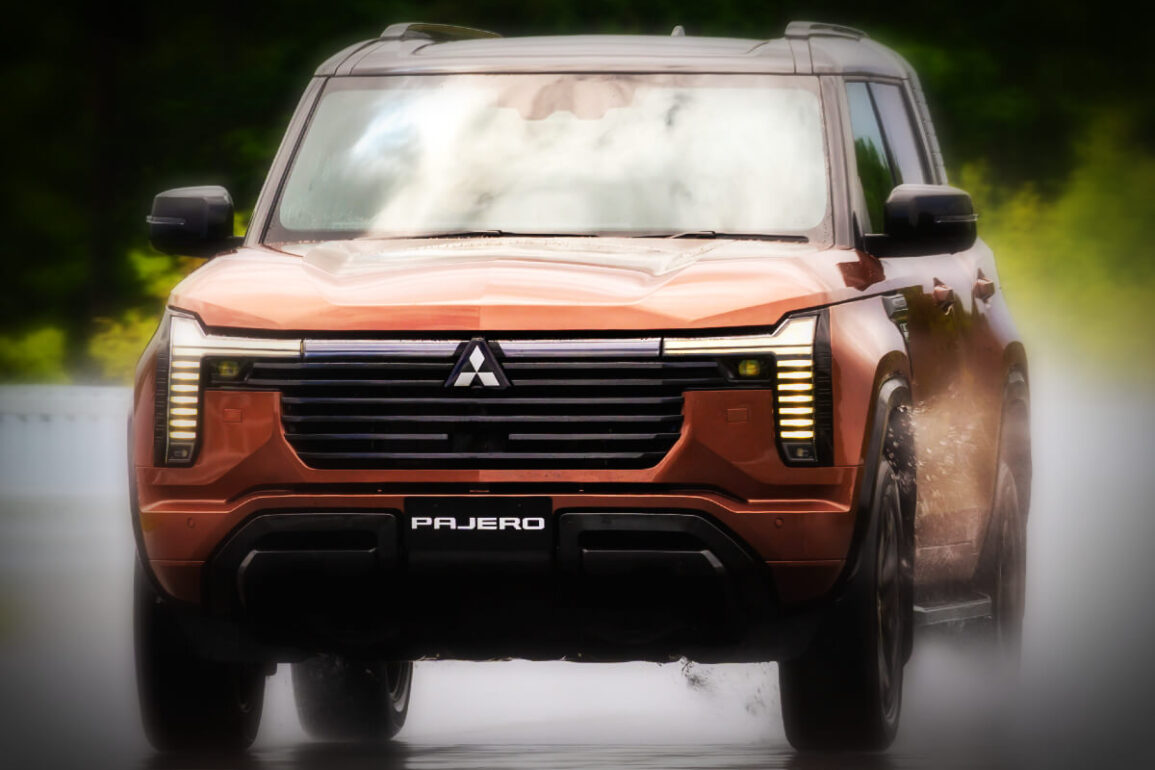

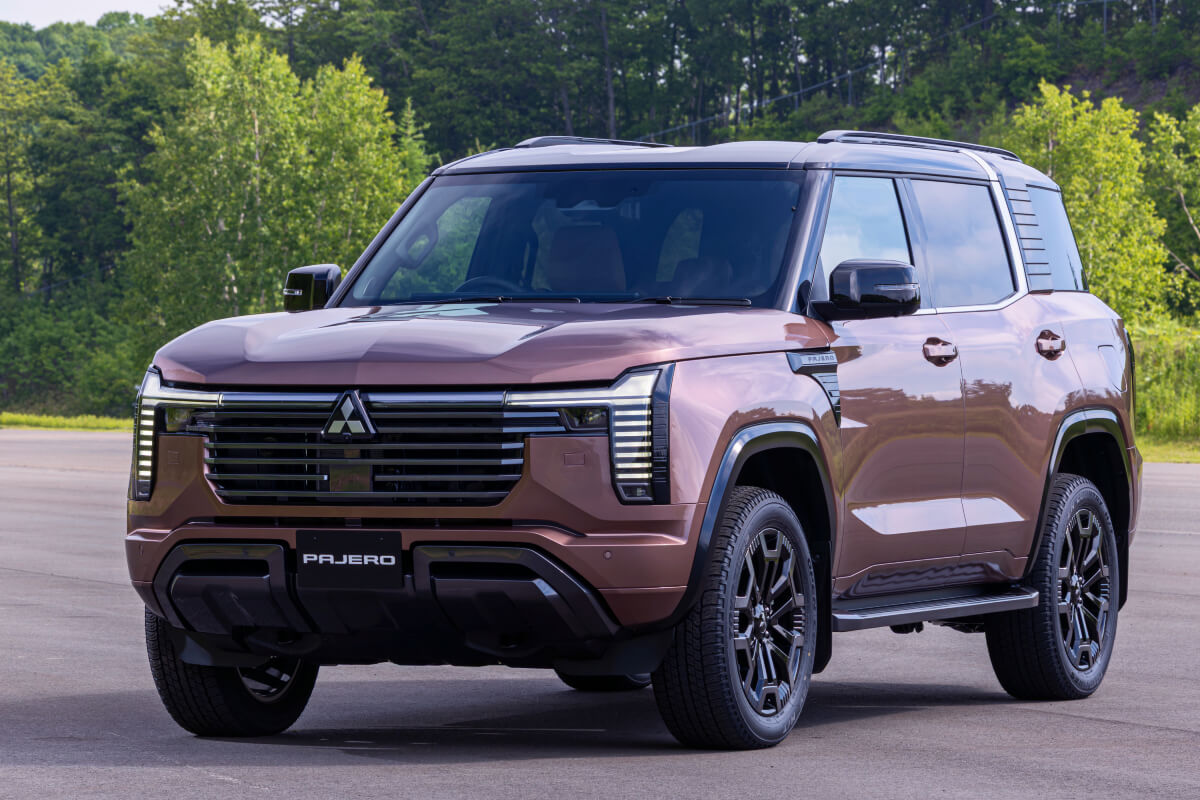
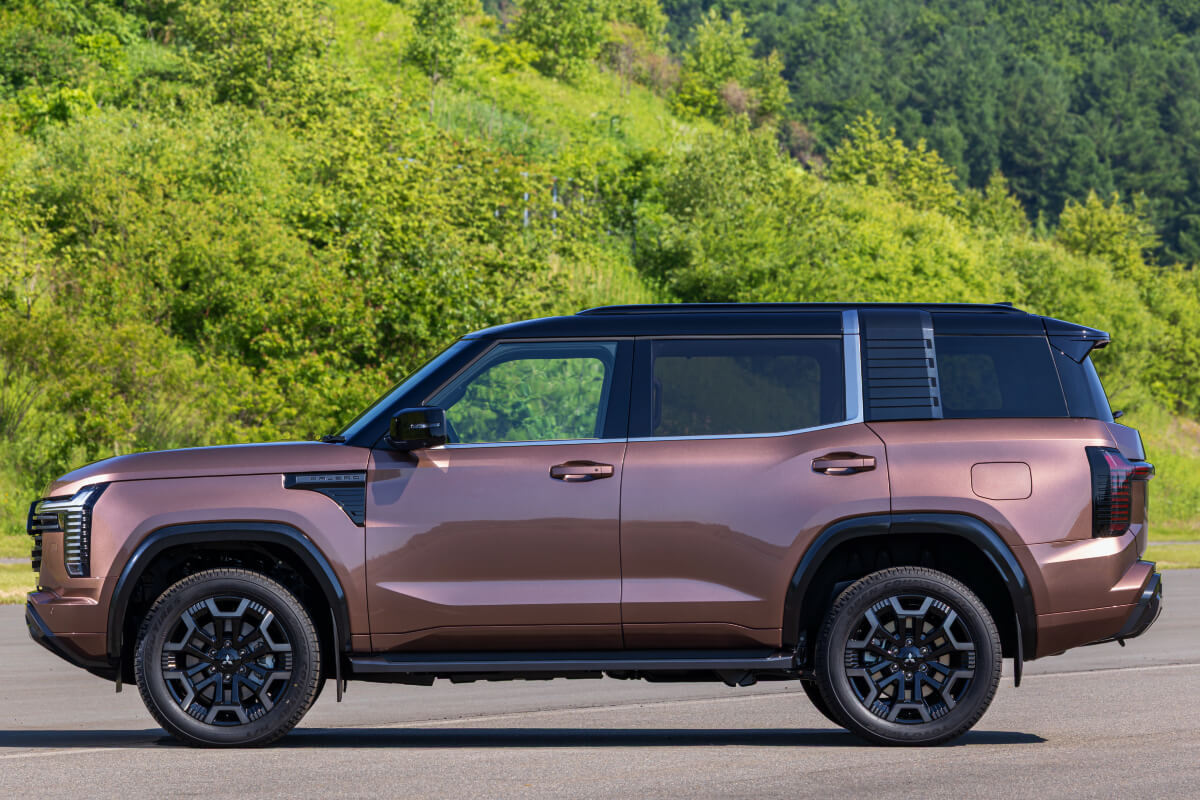
The all-new Mitsubishi Pajero is set to arrive just in time for Christmas.
And, given the number of old Pajeros still on the road, there could be plenty of takers queuing up to grab one.
A family favourite, production of the previous model ended in 2021 after a stellar 40-year run.
On its demise, a Final Edition could be had from $55,000-$64,000 plus on-roads.
Aussies will be able to get into a new one from $68,000 through to $84,000 — also before on-road costs.
New Pajero is powered by a new and improved version of the 2.4-litre turbodiesel from the Triton-based Pajero Sport, with 150kW of power and 480Nm of torque.
The latest variable-geometry turbocharger provides increased mid-range torque, providing punchier response.
A water-cooled intercooler, dual-loop EGR system and the adoption of AdBlue and n electric fan cooling system — all contribute to improved efficiency.
Auto engine stop-start increases fuel efficiency in city driving.
Supporting this is an enhanced, lighter-weight eight-speed automatic transmission with a wider ratio spread to support impressive response and reduced fuel use.
The transmission has also been calibrated to support smooth shifting, especially at constant throttle and incorporates engine blipping control on downshifts.
A low-range transfer case is also standard, with a rear diff lock on all grades.
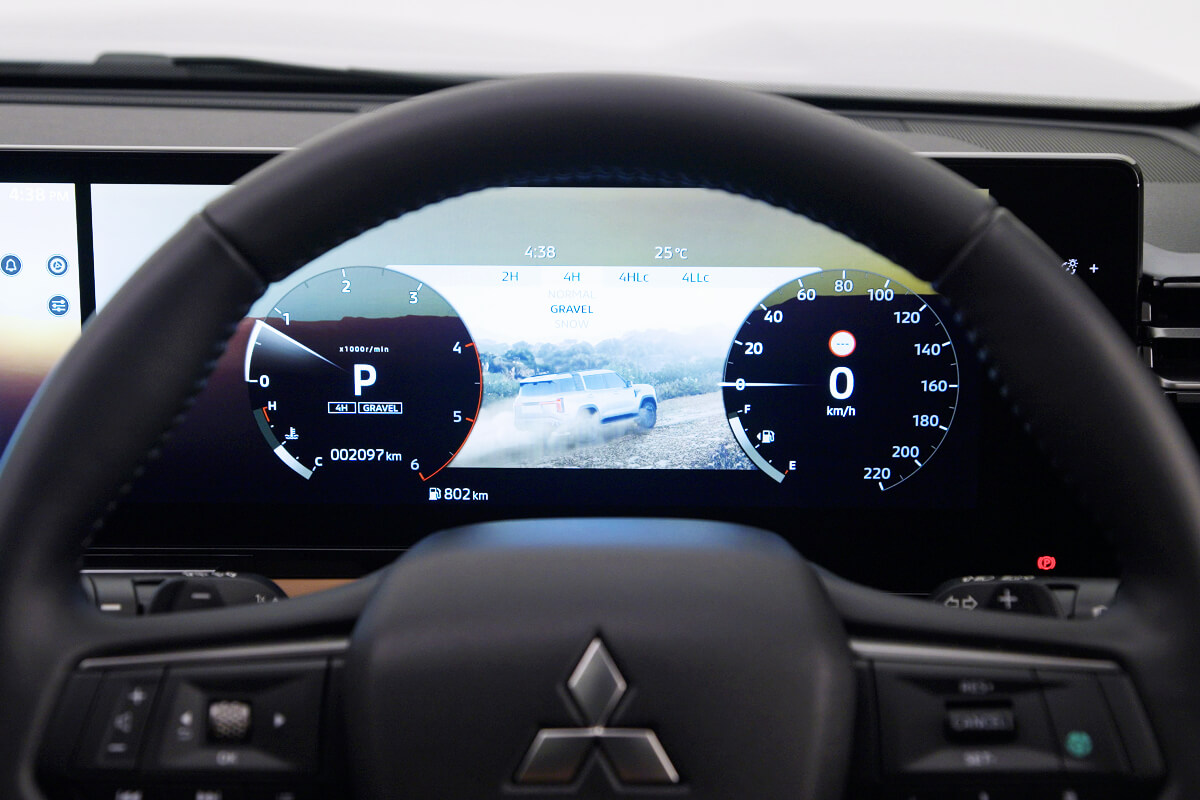
The benchmark Super Select II 4WD system allows the driver to easily switch between drivetrain modes.
In turn, the integrated Super-All Wheel Control with Active Yaw Control further supports driver involvement by tailoring vehicle functions to suit the prevailing conditions, across seven drive modes.
The chassis itself sees a return to a separate body-on-frame design as favoured by the off-road community.
The front section of the ladder frame is shared with the Triton, while the rest of the frame has been modified to suit.
These modifications include additional cross-members and larger side members, as well as “advancement in materials and engineering technology” to increase rigidity.
High-tensile steel usage is claimed to reduce the weight of components by 50 percent, while aluminium is used for the bonnet.
Electric power steering provides a fluid response to driver input.
Pajero offers a 3.5-tonne braked towing capacity, compared with Pajero Sport at 3.1 tonnes, while Trailer Load Assist (TLA) actively enhances stability while towing.
If swaying is detected, TLA can adjust power and braking to each individual wheel to maximise stability.
A static roof-load capacity of 300kg (dynamic: 100kg) ensures popular accessories such as roof racks can be fitted with confidence.
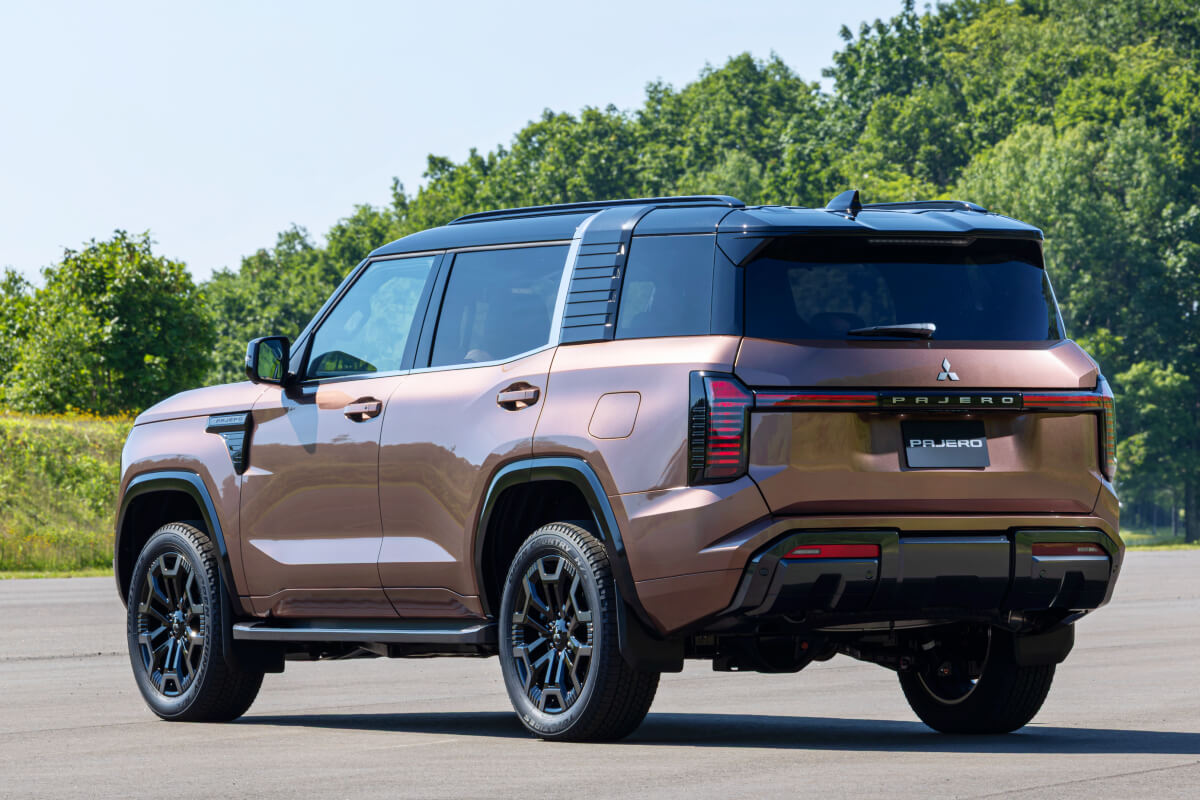
Unlike previous generations, the spare wheel is mounted under the vehicle.
The new Pajero range kicks off with a value-packed GLS grade, priced from $68,490 in five-seat form or $69,990 with seven seats.
Next up is the Exceed seven-seat, priced from $79,990 followed by the sporty, top of the line GSR from $84,990.
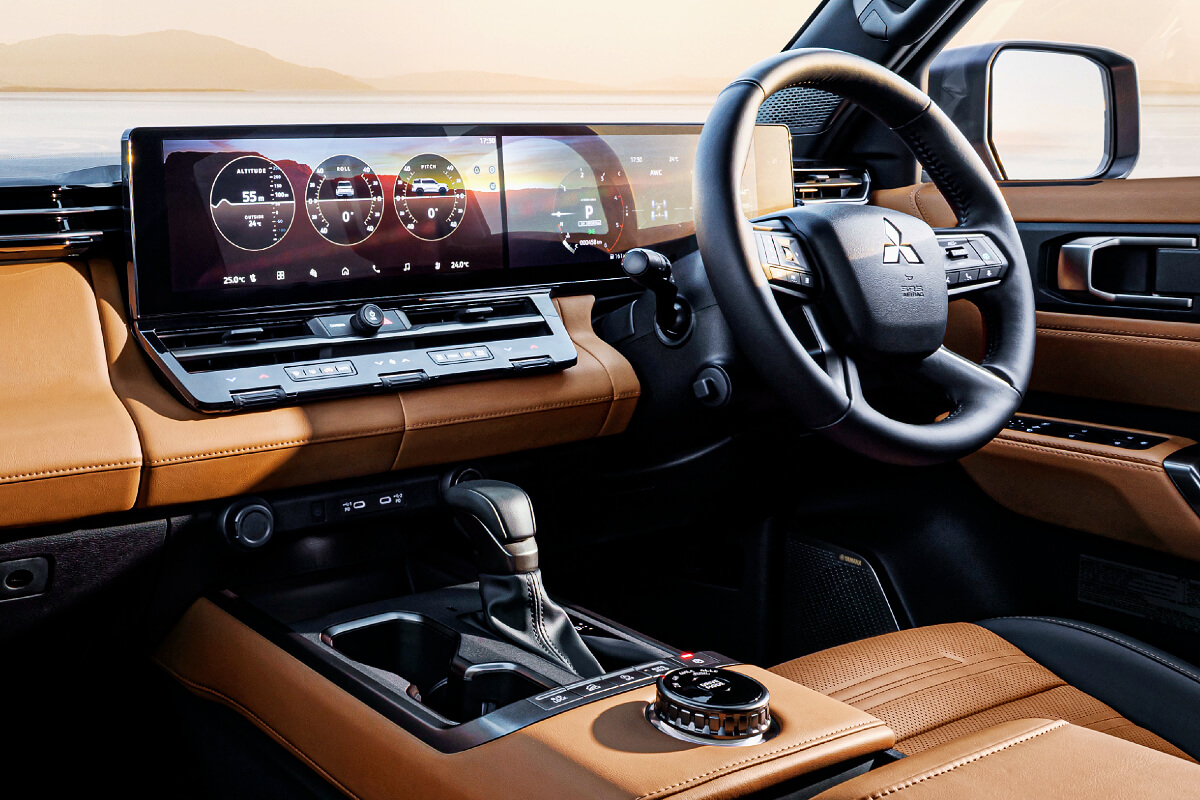
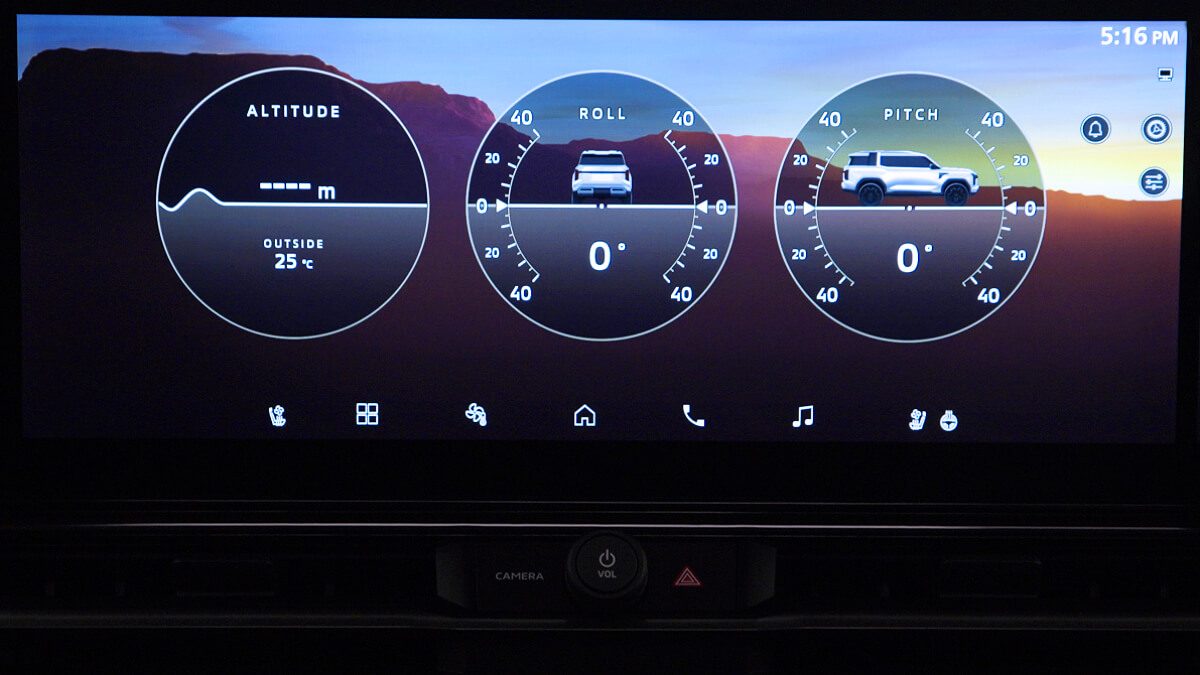
GLS grades feature dual 12.3-inch digital displays, growing to 14.3-inches with Exceed and GSR.
In an inspired move, an off-road screen setting mirrors the three 4×4 gauges which were a hallmark of the previous model — with altimeter and inclinometers to show pitch and roll.

Other items such as a compass, AYC status and world clock are also available.
Top of the range GSR scores 12-speaker Yamaha audio, with an 11-channel dual amplifier featuring Yamaha’s signature digital signal processor and compensation systems for speed, rain and even air conditioning — to deliver crystal-clear audio.
For four generations, Mitsubishi’s Shunichi Kihara said the Pajero defined Mitsubishi.
“It has stood out for its capability, comfort and sheer dependability, showcasing the best Mitsubishi has to offer,” he said.
“The all-new Pajero takes the Pajero backstory and modernises it.
“It maintains its flagship position in the global Mitsubishi hierarchy, combining Pajero’s core attributes and applying it in a way that defines modern ‘Mitsubishiness’.
“Interest has been exceptional, with over 3000 pre-registrations already received,” he said.
CHECKOUT: Electric ASX: not a Mitsubishi, not a Renault — but a Foxtron
CHECKOUT: Mitsubishi ASX: The cat’s out of the bag