



What is it?
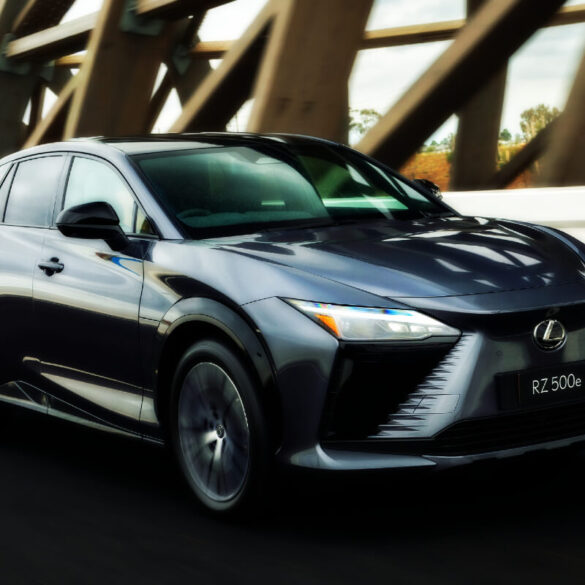
The RZ 500e is the first, purpose-built, fully electric model to come from Lexus.
What about the UX 300e, I hear you ask? Yes, it’s available in fully electric form, but it was seconded to the role.
Launched in 2022, the RZ marks a welcome return to the Lexus we know and love, the creator of slick, super smooth motor cars that started with the V8-powered LS 400 — all those years ago.
Sorry, Lexus, but the RZ is so much better than the tinny hybrids that have been offered up over the last decade, especially the smaller cheaper ones.
But for an EV, and it’s a big BUT, the RZ is already showing its age, with a sub-500km driving range — maybe even less than 400km in the real world.
Sharing a platform with the Toyota bZ4X and Subaru Solterra, RZ’s rivals include the Audi Q4 e-tron, BMW iX3, Jaguar I-Pace, and the Mercedes EQC — plus an ever-expanding list of Chinese wannabes.
What’s it cost?
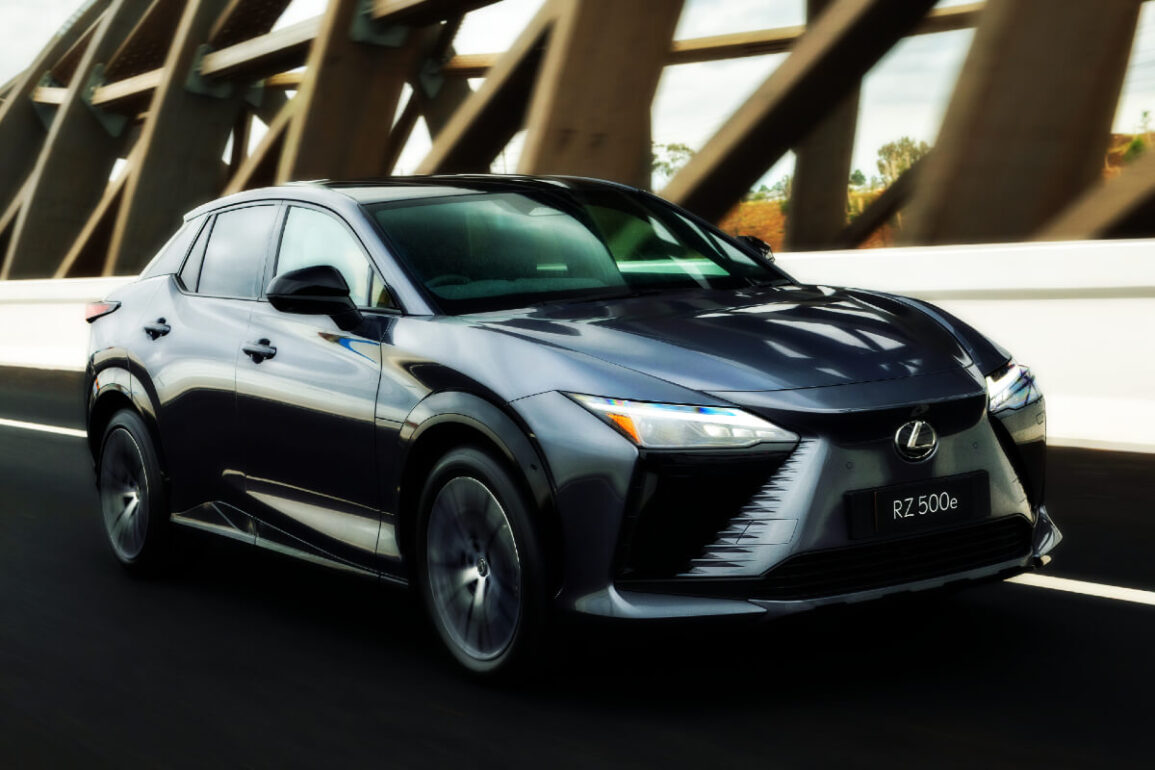
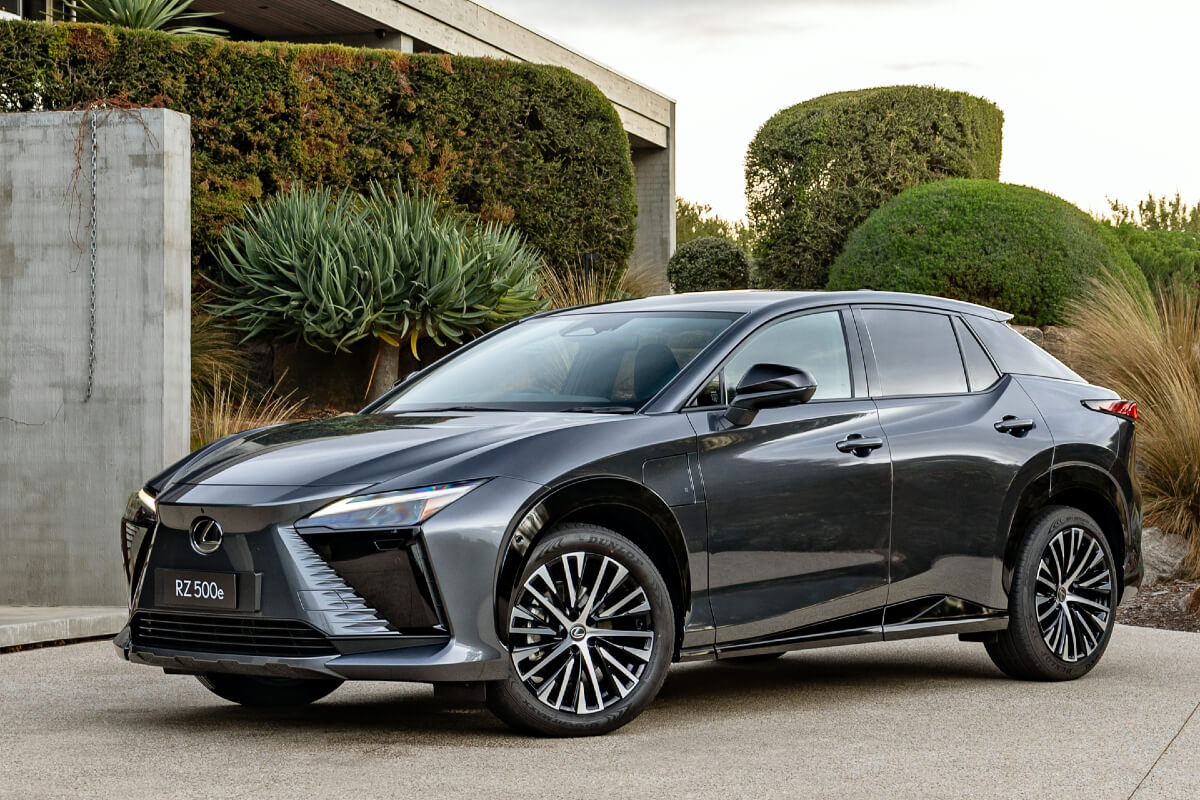
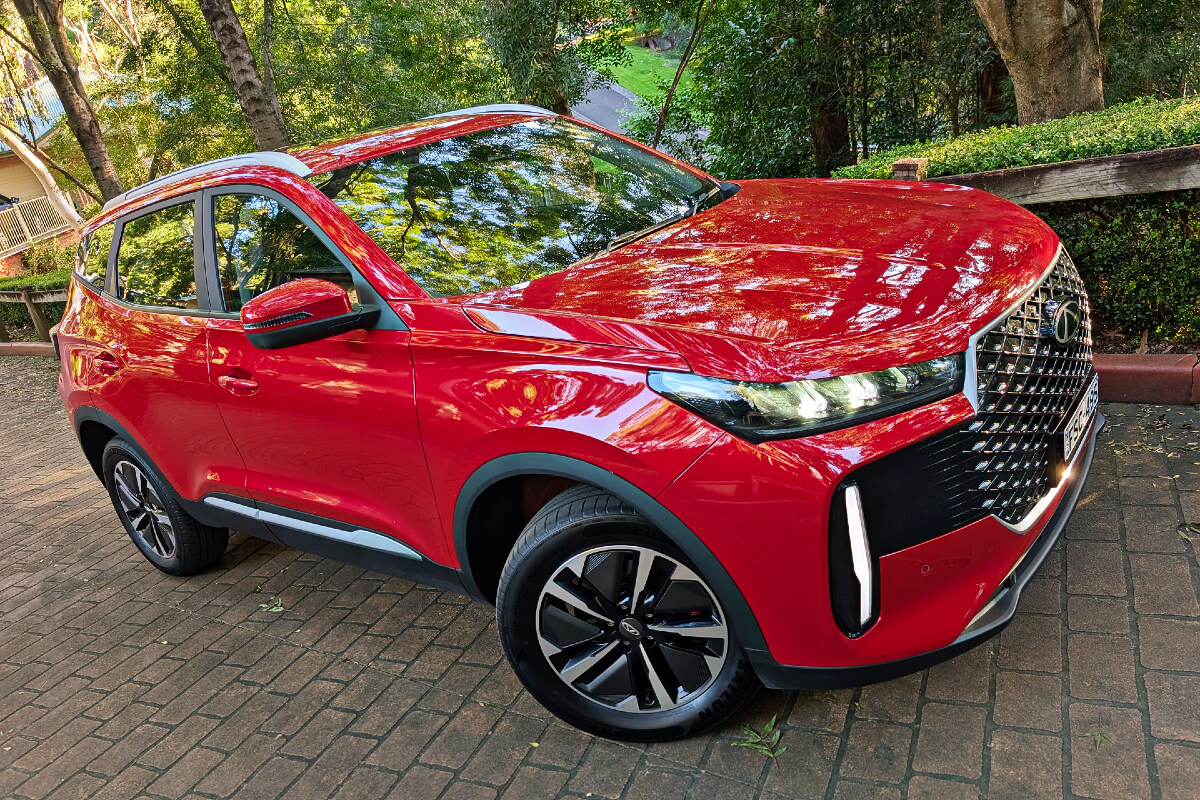
The styling of the RZ is refreshingly different, inside and out after a run of same-looking Chinese EVs.
Front and centre is the signature Lexus spindle grille, but it’s been adapted to meet the demands of an EV. Subtle and less confronting, it actually looks better than the original.
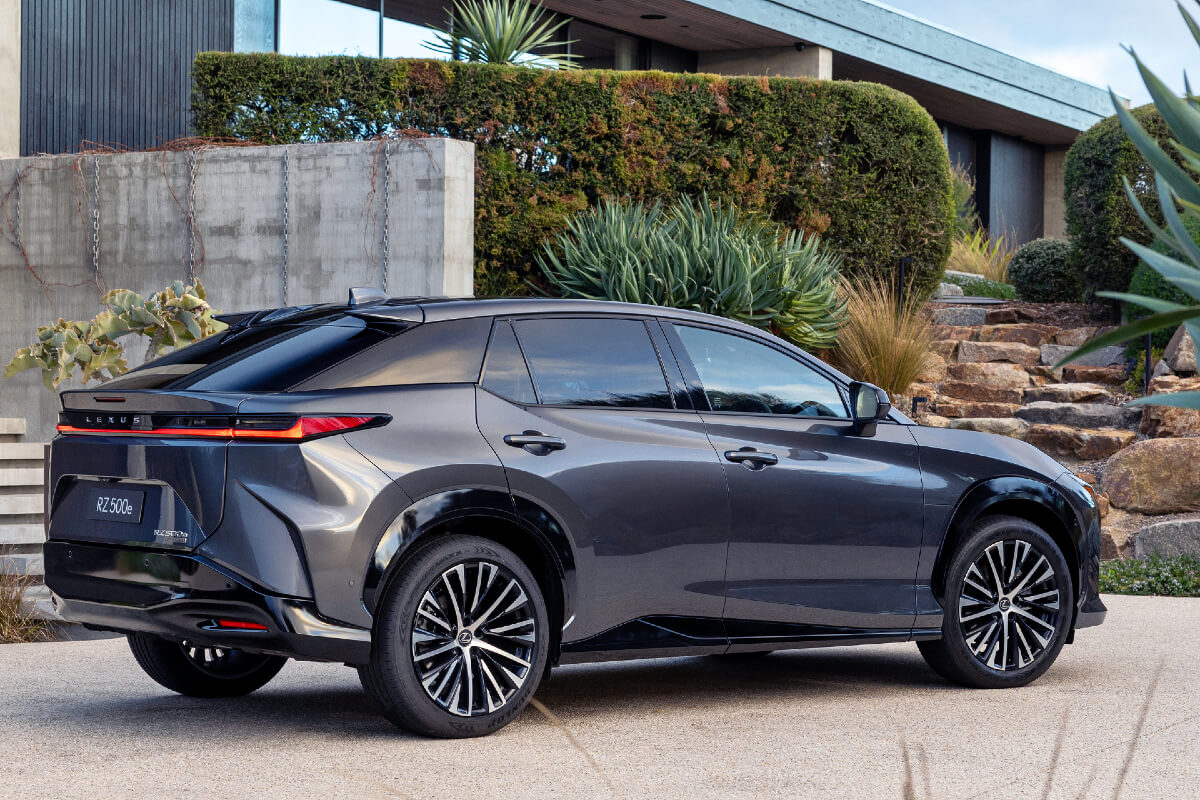
Down the back however can be found the obligatory full width light bar. Something more imaginative could have been used here.
The 20-inch spoked alloys look the biz, wider and deeper-dished at the rear, with Dunlop SP Sport Maxx rubber — 255/45 rear and 235/50 front.
Lexus RZ comes in three flavours: 500e Luxury ($84,500), 500e Sports Luxury ($91,000) and 550e F Sport ($105,000), all prices before on-road costs.
A limited edition 600e F Sport is coming, supposedly by the end of the year.
The first two share the same drivetrain, while the 550e F Sport gets a bit more battery and a little more poke — at the expense of less range.
RZ was updated in May this year, with a larger, redesigned battery pack that offers increased range and faster charging, while retaining the same amount of cabin space.
The front and rear eAxles have been refined to deliver more power with greater efficiency, creating a quieter, more comfortable driving experience.
Total system output for the dual-motor, all-wheel-drive system has increased by more than 20 per cent to 280kW.
The DIRECT4 all-wheel drive system improves traction and stability, variably controlling the front/rear distribution of power between 60:40 and 0:100 (between 80:20 and 0:100 in corners).
Other changes include increased body rigidity with additional bracing and retuned dampers and springs, plus less noise, vibration and harshness (NVH).
Standard kit includes NuLux artificial leather in a choice of Hazel or Greyscale, heated front seats with eight-way power adjustment, powered steering wheel adjustment, dual-zone climate air with NanoeX filtering, powered tailgate and 7.0-inch multi-information display.
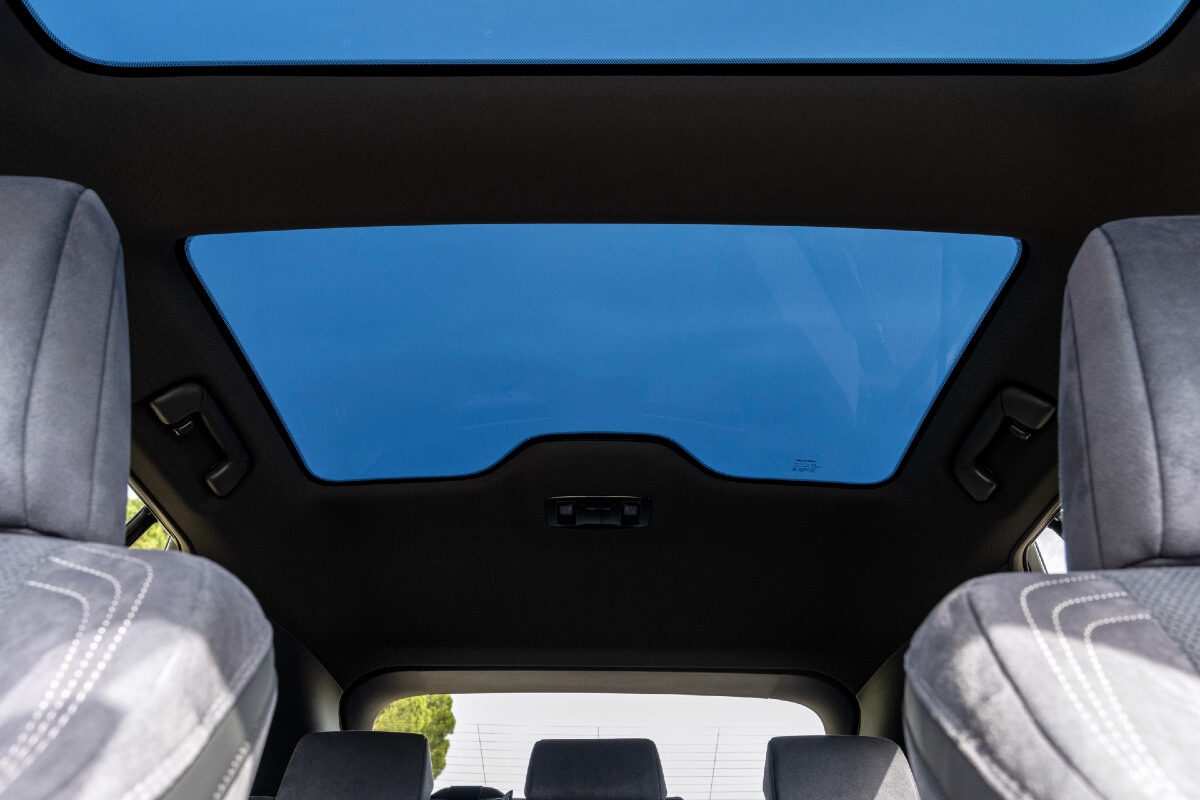
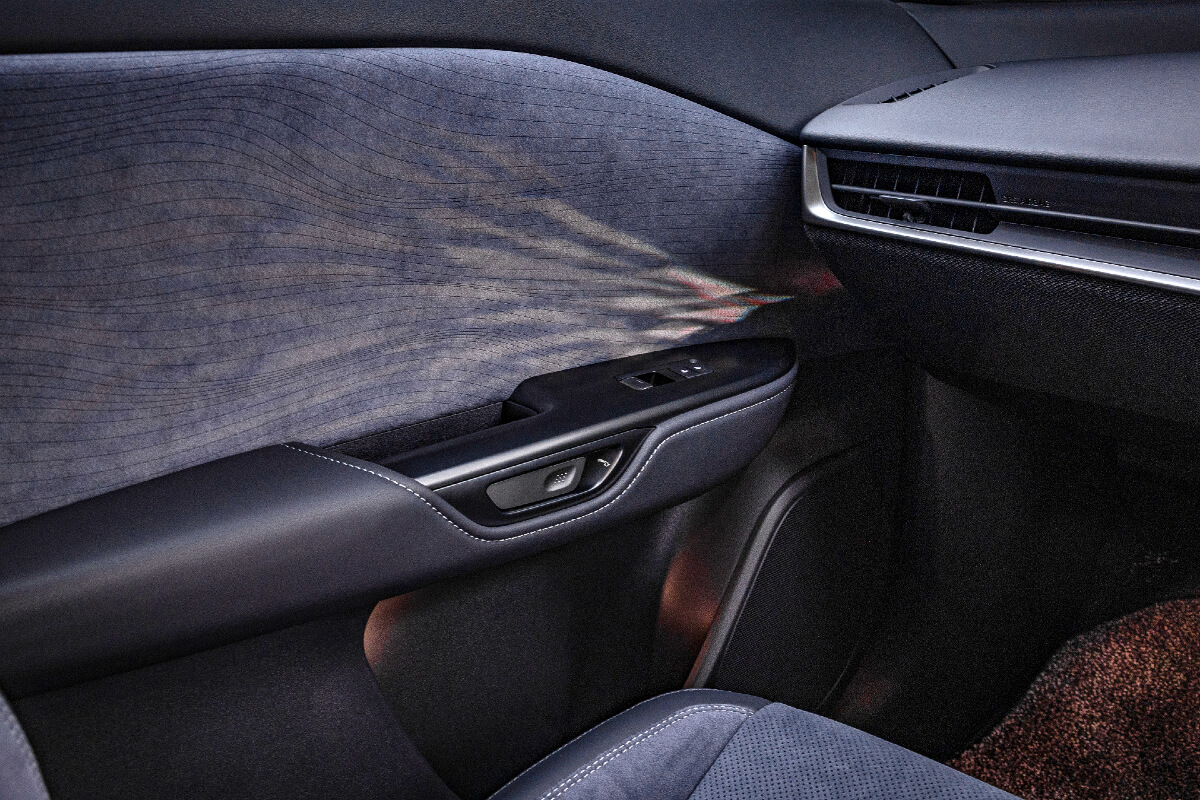
Sports Luxury adds two-tone alloys, Ultrasuede upholstery in Hazel, Greyscale or Storm, Tsuyasumi ornamentation, dynamic multi-colour illumination, heated and cooled front seats with three-position driver’s seat memory, heated rear outboard seats, heated steering wheel and a black dimming panoramic roof.
There’s also head-up display, high-grade multi-information display, digital rear view mirror, dynamic auto-levelling headlights and 13-speaker Mark Levinson audio.
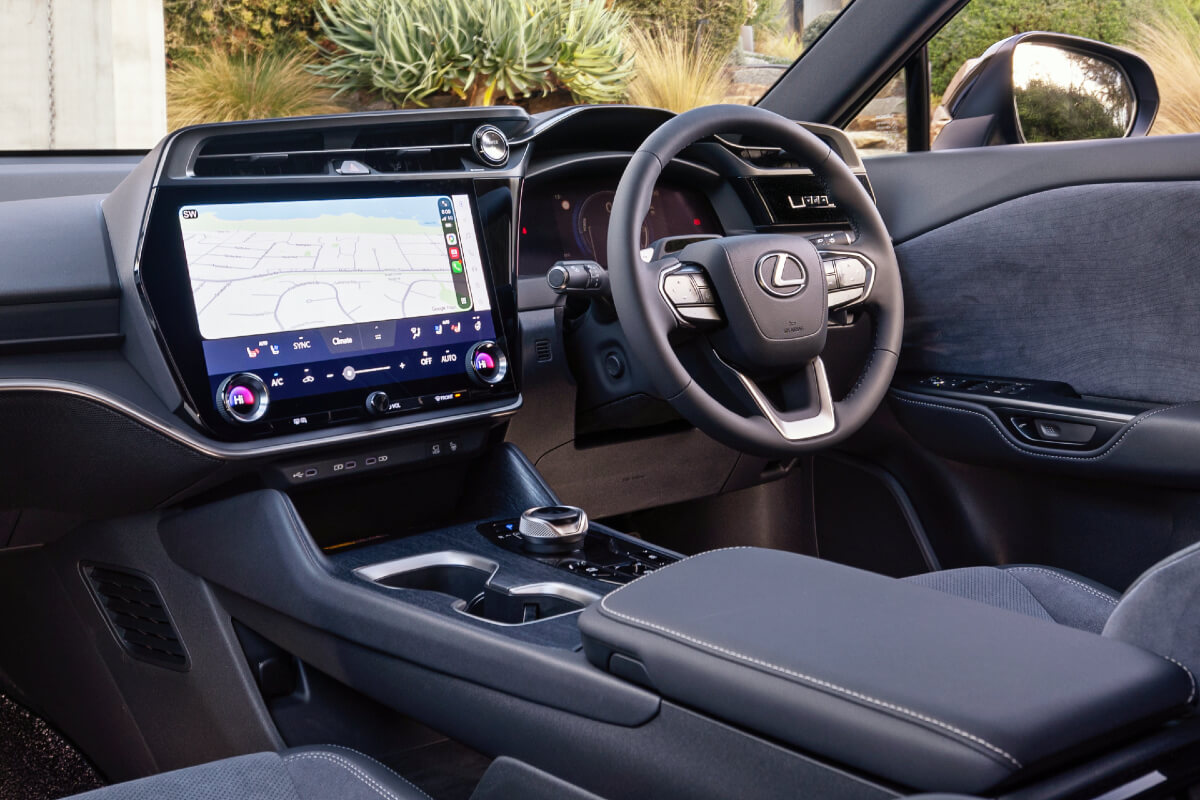
The design of the dash is thoughtful, with a conventional layout that sees the infotainment and driver displays inset rather than the freestanding like competitors.
A 14.0-inch touchscreen offers access to Bluetooth, voice control, AM/FM and DAB+ digital radio, built-in satellite navigation, wireless Apple CarPlay and Android Auto, plus a 10-speaker Panasonic audio system as standard.
Importantly, physical controls are provided below the screen for oft-used functions like the aircon and audio volume. Thanks.
There’s also wireless phone charging, with 3 x USB-C ports in the front plus another 2 x USB-C and a 12 volt outlet in the rear.
RZ scores a maximum five-star rating from the ANCAP organisation, with Autonomous emergency braking (Car-to-Car, Vulnerable Road User, Junction & Crossing, Backover and Head-On) as well as a lane support system with lane keep assist (LKA), lane departure warning (LDW) and emergency lane keeping (ELK), and an advanced speed assistance system (SAS).
Sports Luxury adds Adaptive High-beam System (AHS) and Intelligent Parking Assist.
RZ is covered by a 5-year unlimited kilometre warranty, with a three-year complimentary membership to the Lexus Encore owner benefits program.
What’s it go like?
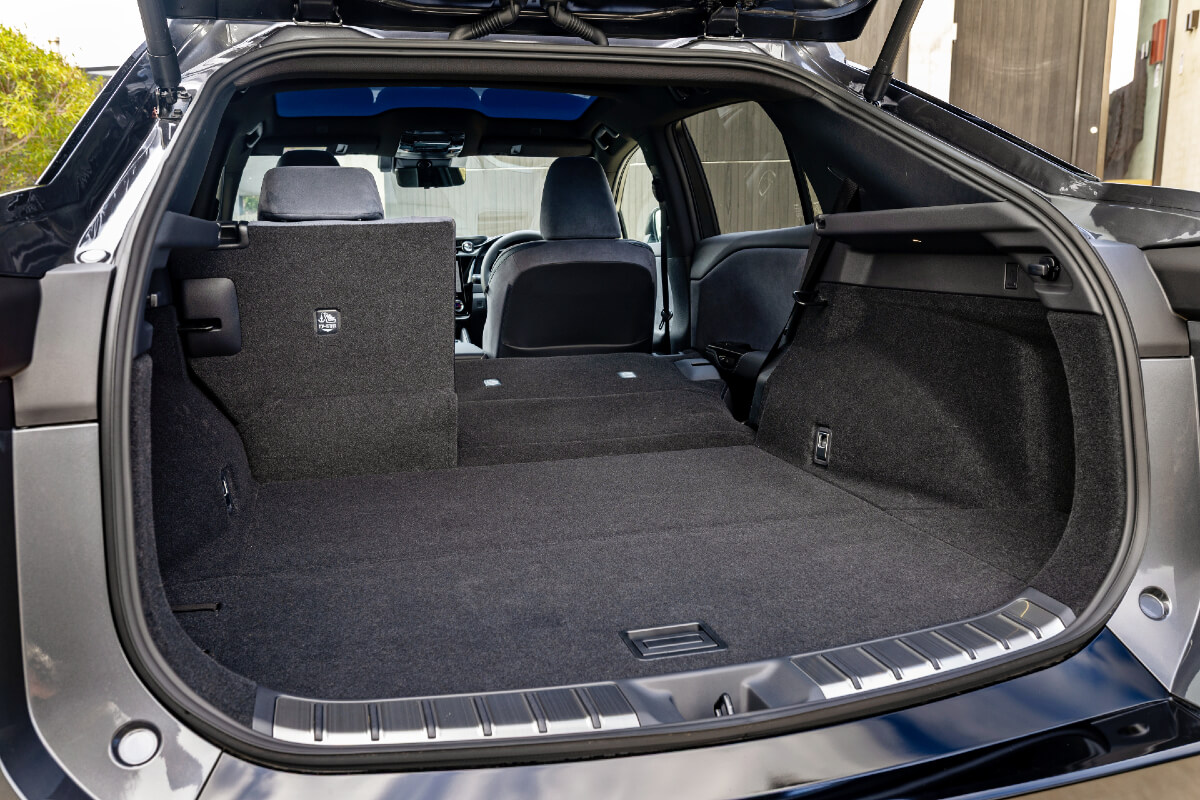
With seating for five, the RZ is described as a large SUV, at 4805mm in length with a 2850mm long wheelbase.
In keeping with the fact it’s an SUV, Lexus reveals it has 155mm of ground clearance and laughingly provides entry and exit angles, as if it was a Land Cruiser — no one would dream of taking this beauty off-road.
The cabin is a nice place to spend an extended period, the drive experience is quiet and smooth, with brisk acceleration, and steering and braking that feels just like a real car.
Providing motivation are two electric motors and a 74.7 kWh battery pack, with torque on-demand to all four wheels via a single-speed reduction gear style transmission.
Each motor produces 167kW of power and 269Nm of torque, with combined output limited to 280kW (combined torque is not provided as usual).
The dash from 0-100km/h takes a swift 4.6 seconds on the way to a top speed of 180km/h.
Lexus claims a driving range of 460km from a single charge under the more indicative WLTP test cycle.
Output for the F Sport with a larger 77kWh battery is boosted to 300kW, but range takes a hit at 437km.
The limited edition RZ 600e F Sport Performance amps things up with 313kW, less range again at 420km and the addition of some bespoke weight-saving and aerodynamic enhancements.
The previous RX 450e copped a serve for being too expensive at $120K while offering too little range at around 400km (WLTP).
Lexus has addressed the question of price, with the 500e starting from $84,000, but it soon becomes clear that range or distance to empty as it used to be called is still an issue — bigger battery or not.
The claim the new and improved RZ 500e can travel up to 460km on a single charge is somewhat tenuous, on paper and out on the road.
It’s based on a slightly larger battery (74.7 versus 71.4 kWh) and claimed power consumption of 18.0 kWh/100km (18.3 kWh/100km previously).
Do the math? Divide 74.7 x 18 and you get 4.15, or 415km — it couldn’t be simpler?
And this is essentially what the car displayed, at pickup and after two successive charges — 420km, 408km and 406km (no sign of the promised 460 at any point).
In fact, digging a little deeper reveals only 72kW of the 74.7kWh is actually usable which reduces the figure further — to 400km to be exact.
So, how did they arrive at a figure of 460km? Good question, because to get that the RZ would need to only 16.2kWh/100km.
But that’s in a test environment, not in the real world where it counts.
Even Lexus explains that actual driving range may vary depending on accessories fitted, battery age and condition, climate, driving style, use of heating/cooling, traffic conditions, and vehicle load.
To get a more realistic figure we took the R500e on the road, clocking up more than 700km in the process.
Experience shows EVs tend to perform poorly in terms of power consumption over long distances at motorway speeds.
And, on a 270km run from Sydney to Canberra, we were lucky to get to our destination at all, arriving with just 30km left in the tank.
That folks, puts the RZ’s actual range closer to 300km.
Sure, much of this distance was spent at 110km/h on the motorway, in sport mode with the aircon pumping.
But it doesn’t get much ‘realer’ than this, does it? Which begs the question: who’s in charge here — us or the EV?
Charging goes hand in hand with range and also bears some scrutiny.
Our test vehicle was supplied with a Type 2 cable as well as an emergency AC granny charger.
Some EVs come with neither these days, rendering sites that require BYO cables suddenly useless.
The RZ can be recharged at a rate 0f 22kW with AC or at a rate of up to 150kW with a commercial fast DC charger.
Re-charging overnight in Canberra with the supplied granny charger got us back on the road, with 50 per cent charge and 200km of range by midday the next day.
A little wiser and cautious, we headed back for Sydney, this time in economy mode, with both the aircon and fan turned off most of the way — our first port of call a 210kW DC fast charger in Goulburn (about 110km away).
We made it comfortably, with 70km and 19 per cent charge remaining.
With a fast charger such as this, Lexus claims the car can be recharged from 10 to 80 per cent — in as little as 28 minutes.
And, while recharging the car was comparatively brisk this time, the best figure we saw was 105kW and this was only for a brief period.
It took almost 54 minutes to add 62kWh, charging the battery from 19 to 100 percent — a far cry from that promised.
It’s also interesting to note that Lexus warns charging a battery past 80 per cent will see it degrade over time.
If that’s the case, then the size of the battery, any battery, is not as large as the figures imply. Talk about smoke and mirrors.
Our next stop was Springwood in the Blue Mountains, about 200km distant.
Sitting behind the wheel, this time at 100km/h, both the air and fan turned off, range dropped almost immediately from 408 to 385km.
In fact, rarely did power consumption dip below 21 kWh/100km and more often than not we found ourselves glancing at the range — rather than the scenery. Had we become slaves to the car?
We got to our final destination with about 50 per cent charge remaining.
This time recharging at a 22kW AC charger with the provided cable, a process that took bang on two hours to add 41.45 kWh (at a maximum rate of just under 22kW).
All told we clocked up 725km at an average of 18.8 kWh/100km, with a best of 15.5 and worst of 21.4 kWh/100km.
That represents a range of 383km and that figure we believe is much closer to the truth.
What we like?
- Smooth, quiet and rapid performance from the 280kW dual-motor AWD system
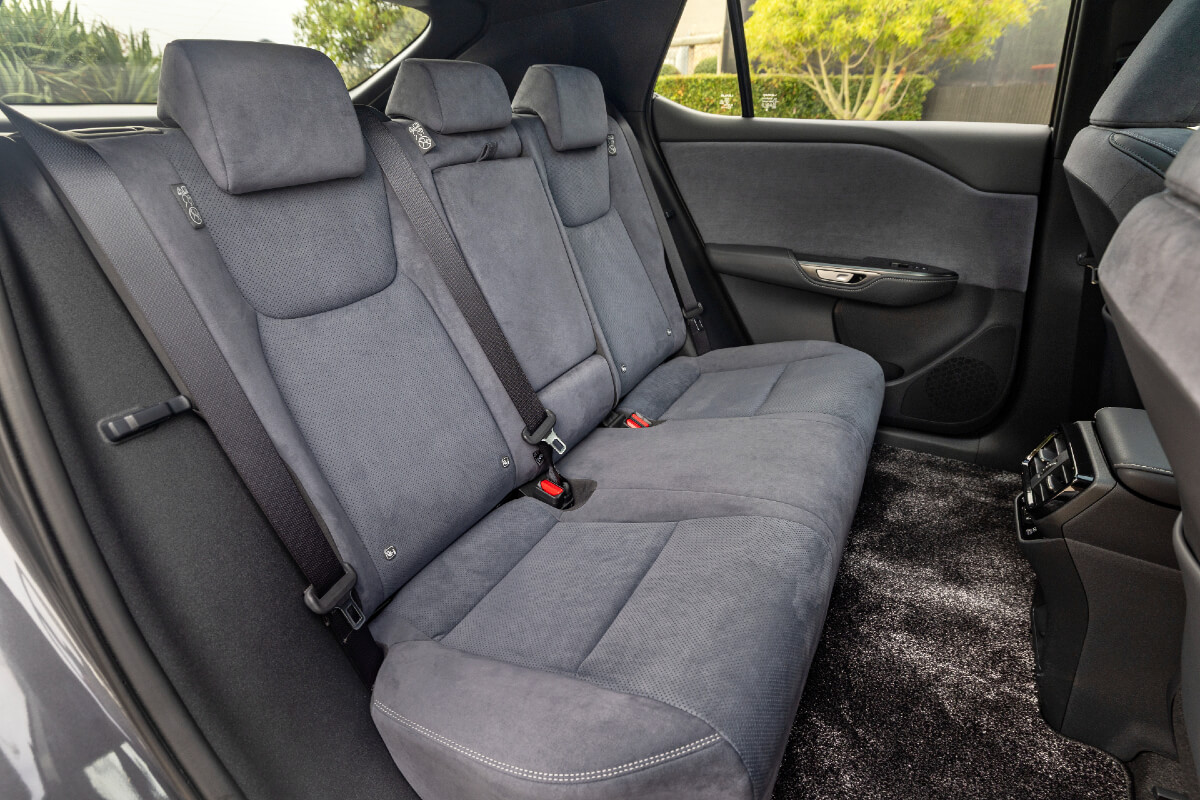
- Refined Lexus cabin with excellent materials, comfort and physical controls
- Strong equipment levels, especially in Sports Luxury trim
- Five-star ANCAP safety and confident DIRECT4 all-wheel-drive traction
What we don’t like?
- Real-world range falls well short of Lexus’s 460km claim
- Highway driving can reduce range to around 300km
- DC charging was slower than advertised in testing
- High pricing and range anxiety undermine the RZ’s EV appeal
The bottom line?
It’s time for a rethink, Lexus.
We like the style, the comfort and the way the RZ 500e drives.
But a range of 500km is closer to expectations and if we were planning the release of a new model, we’d be budgeting for 600km plus.
The RZ 500e is cheaper and more accessible, but any gains in driving range appear to be marginal at best.
In some EVs range seems to evaporate more quickly than others. Unfortunately the RX happens to be one of them.
You’ve probably heard the term range anxiety?
It’s only going to be when people start to relax about the range of EVs that sales will really take off and that’s a problem for legacy manufacturers that are locked into historically long product cycles.
CHECKOUT: Lexus RX 450h+ PHEV: Plug and play
CHECKOUT: Lexus TZ EV a veritable rolling lounge
Lexus RZ 500e Sports Luxury, priced from $91,000
-
Looks - 8/10
8/10
-
Performance - 7.5/10
7.5/10
-
Safety - 8/10
8/10
-
Thirst - 6/10
6/10
-
Practicality - 7/10
7/10
-
Comfort - 8/10
8/10
-
Tech - 8/10
8/10
-
Value - 8/10
8/10
