



What is it?
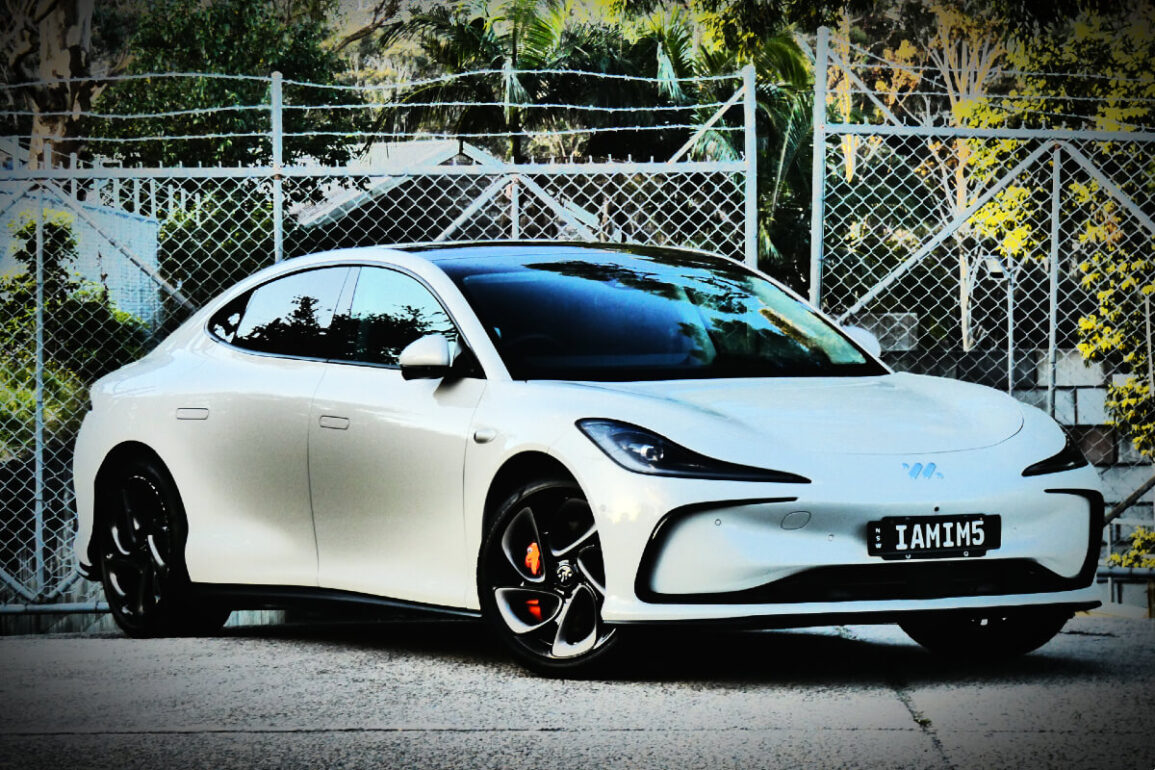
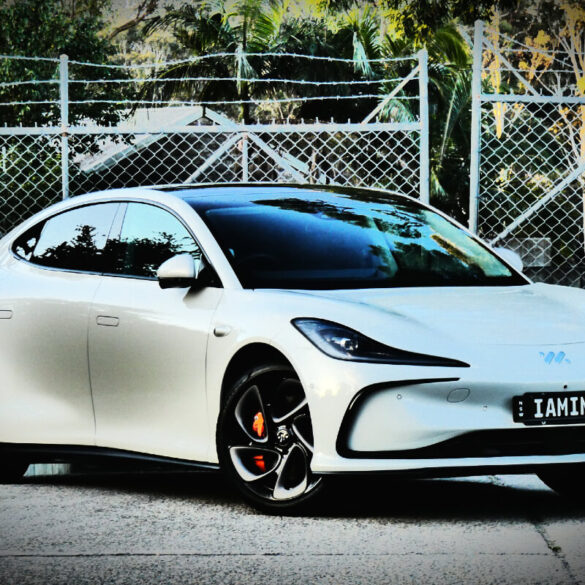
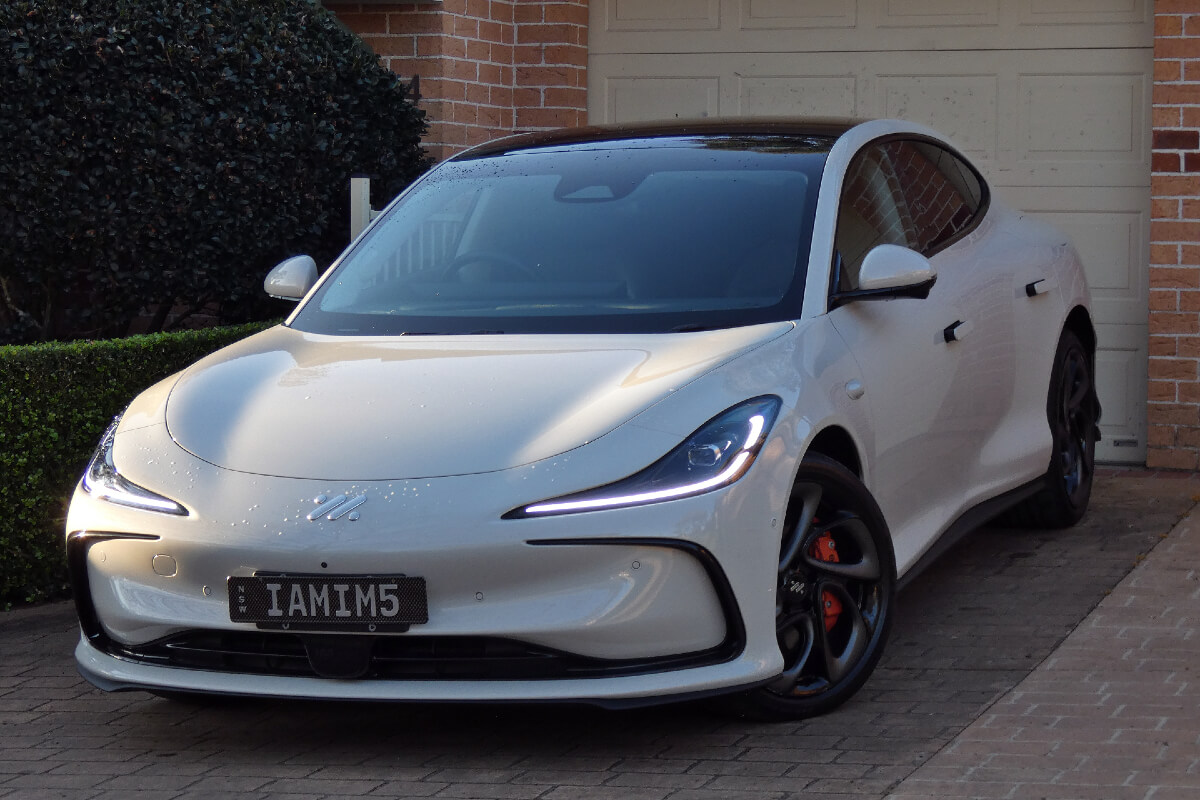
It’s the IM5 and if you’re wondering who or what that is, so were we.
IM stands for Intelligence in Motion and it is the upmarket division of MG (like Lexus is to Toyota), with vehicles that have been developed jointly with the likes of SAIC Motor and the Alibaba Group.
In Australia, the brand is known officially as IM Presented by MG Motor. Most punters however refer to the car as the MG IM5. Good luck with that.
The all-electric IM5 sedan/coupe appears to be targeted primarily at the Tesla Model 3. The IM6 SUV at the Tesla Model Y.
What’s it cost?
There’s three grades from which to choose: Premium, Platinum and Performance.
Premium is priced from $60,990, Platinum from $69,990 and Performance from $80,990 — all plus on-roads.
At a glance, the three appear to be almost identical. You need to dig a little deeper to work out the differences, most of which are confined to the drivetrain department — rather than the equipment list.
Premium is powered by a single electric motor that delivers 217kW of power and 450Nm of torque to the rear wheels, with a 75kWh battery and range of 490km.
Mid-range Platinum is also rear-wheel drive, but with a more powerful 300kW/500Nm electric motor, and a larger 100kWh battery and range of 655km.
Range-topping Performance adds all-wheel drive to the equation, with two electric motors that offer 200kW/320Nm at front and 372kW/500Nm at the rear, with a 100kWh battery and range of 575km (it takes more effort to drive four wheels).
Of note Premium is built on 400 watt architecture, while Platinum and Performance share the more advanced 800 watt format that in theory means faster charging, providing you can access a compatible charger.
Those range figures by the way are under the newer, more realistic WLTP testing procedure.
Our test vehicle was the Performance model, apparent from the 20 inch wheels and P-Zeros plus the fact it blazes out of the gates like a Space X rocket.
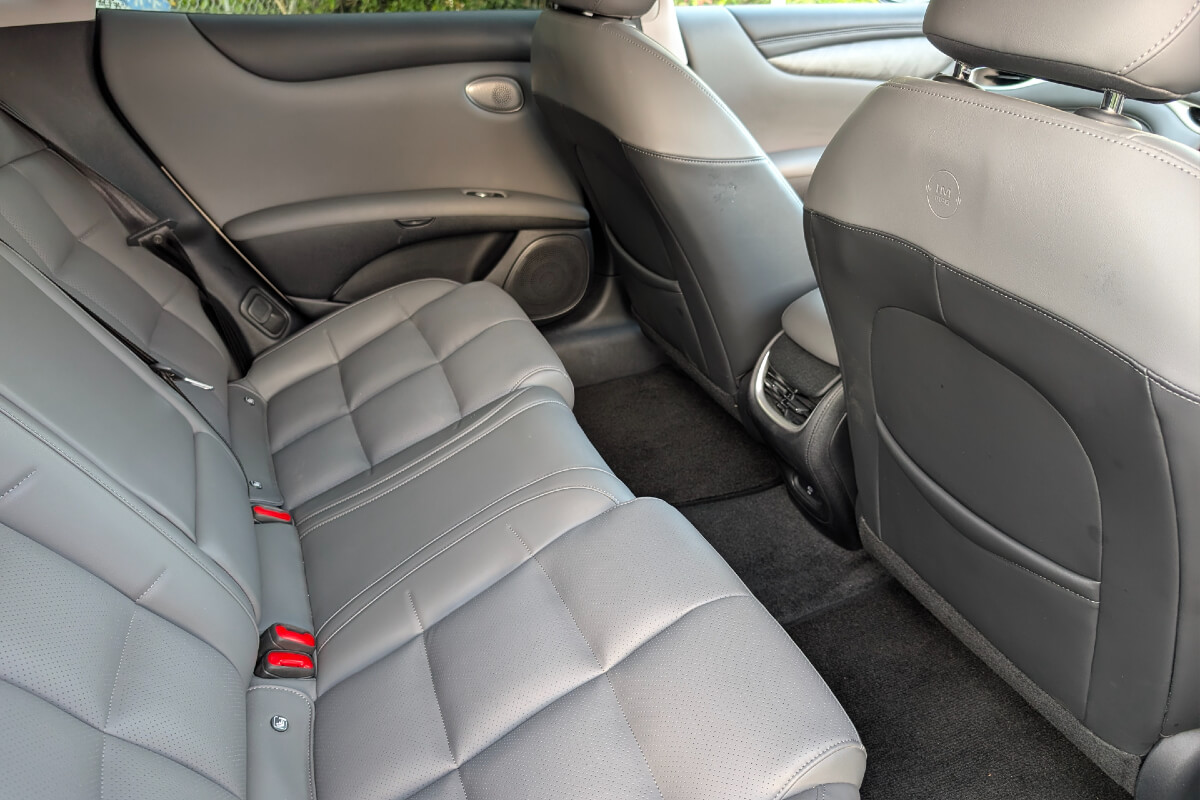
Creature comforts include synthetic leather, two-zone climate air with rear vents, an air quality system, heated seats front and back, plus cooling for the front, heated steering wheel, heated/cooled console box, a full length glass roof and power operated tailgate.
There’s also air suspension, LED lights front and back, push-button hands-free parking
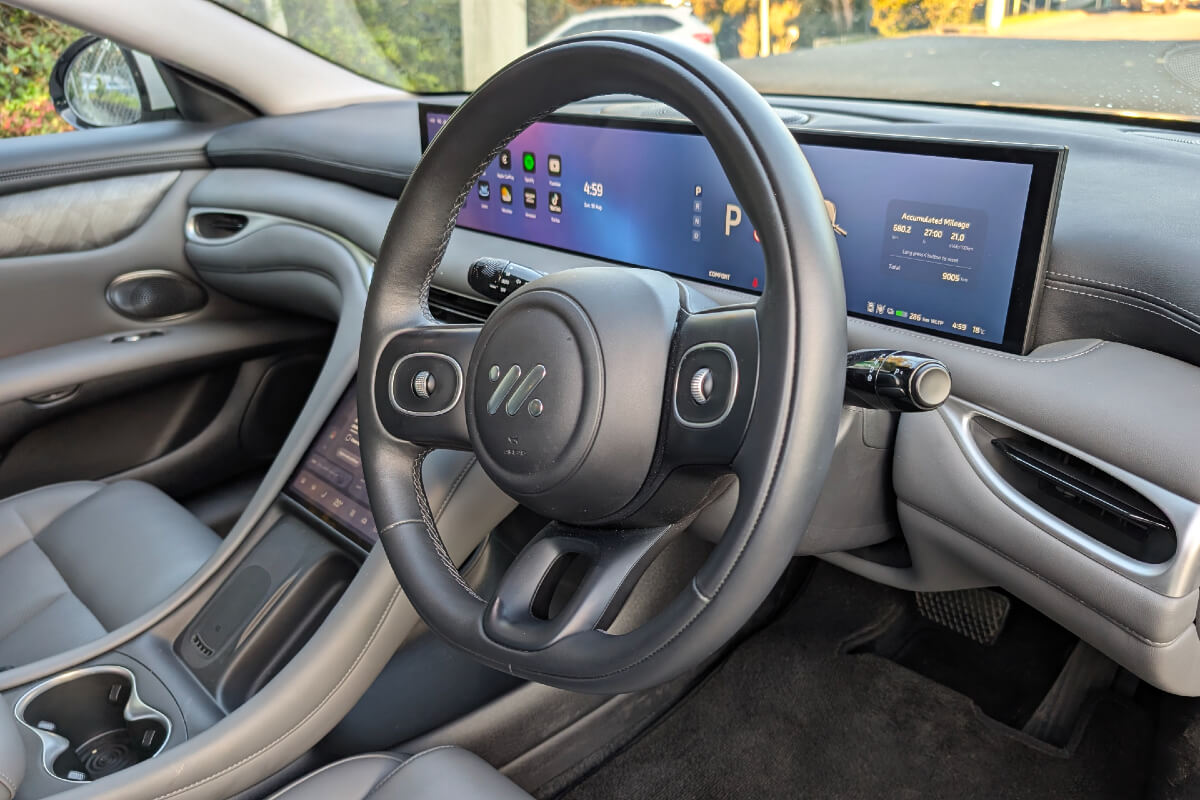
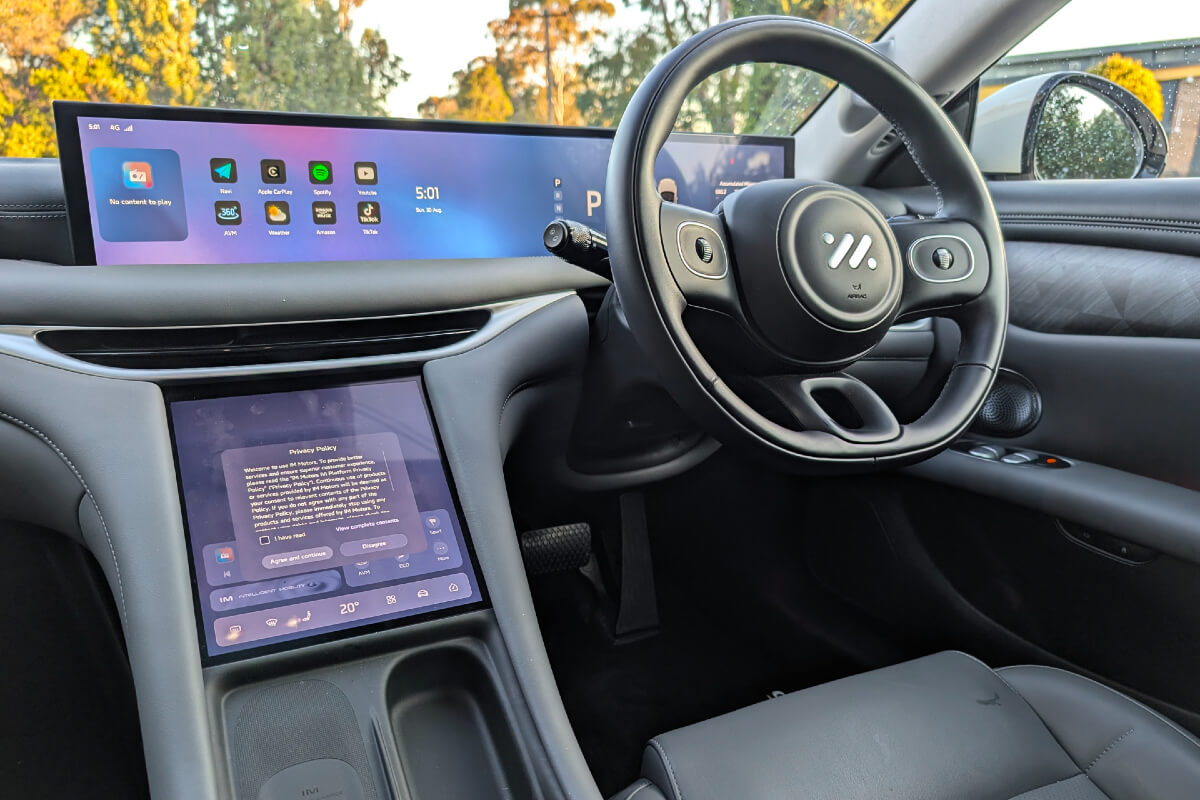
Infotainment comes in the form of dual 12.3-inch screens, with a third 10.5 inch screen that sits in the console.
There’s Bluetooth, Hello IM voice control, satnav, AM/FM and DAB+ digital radio, CarPlay and Android Auto.
Sound comes from a 20-speaker audio system that includes four small roof-mounted speakers.
It’s described as a 7.4.1 setup based on the fact it has 7 x ear‑level channels, 1 x subwoofer channel, and 4 x height/overhead channels.
There’s also wireless phone charging, a card reader, three USB-C ports (2 x front and 1 x back) and a 12 volt outlet virtually hidden at the rear of the lower console.
IM5 scores a full five stars for safety, with dual frontal, side chest-protecting and side head-protecting airbags standard.
A centre airbag which provides added protection to front seat occupants in side impact crashes is also standard.
Autonomous emergency braking (Car-to-Car, Vulnerable Road User, Junction & Crossing, Backover and Head-On) as well as a lane support system with lane keep assist (LKA), lane departure warning (LDW) and emergency lane keeping (ELK), and a speed sign recognition system, are standard equipment.
IM5 is covered by a 7-year unlimited kilometre warranty, plus eight years on the battery, with service due every 20,000km or 12 months.
What’s it going to be like?
The IM5 is quick, that’s for sure.
But it’s not the most practical car we’ve ever driven.
With pop-out door handles and a key fob with a complete lack of labels, the first task is to work out how to get in and out of the thing.
Sitting low to the ground, with an equally low roofline, that can require some athleticism.
Rather than stick your foot in first, it’s more a case of pivoting 90 degrees and planting your bum on the seat, then swivelling sideways and swinging your legs in — being careful to duck as you do.
Once in, there’s no starter button, the system is live from get-go and so it is simply a matter of moving the column-mounted gear selector up or down to select drive or reverse.
And a word of caution here. Mistaking the gear selector for the indicator stalk can send the car shooting forward, scaring the pants off you — because this engages cruise control.
This oversight is not confined to the MG or Im and is really something that needs to be addressed.
IM5 is 4931mm in length, 1960mm wide and 1474mm high with a 2950mm wheelbase, and weighs in at 2300kg in top spec.
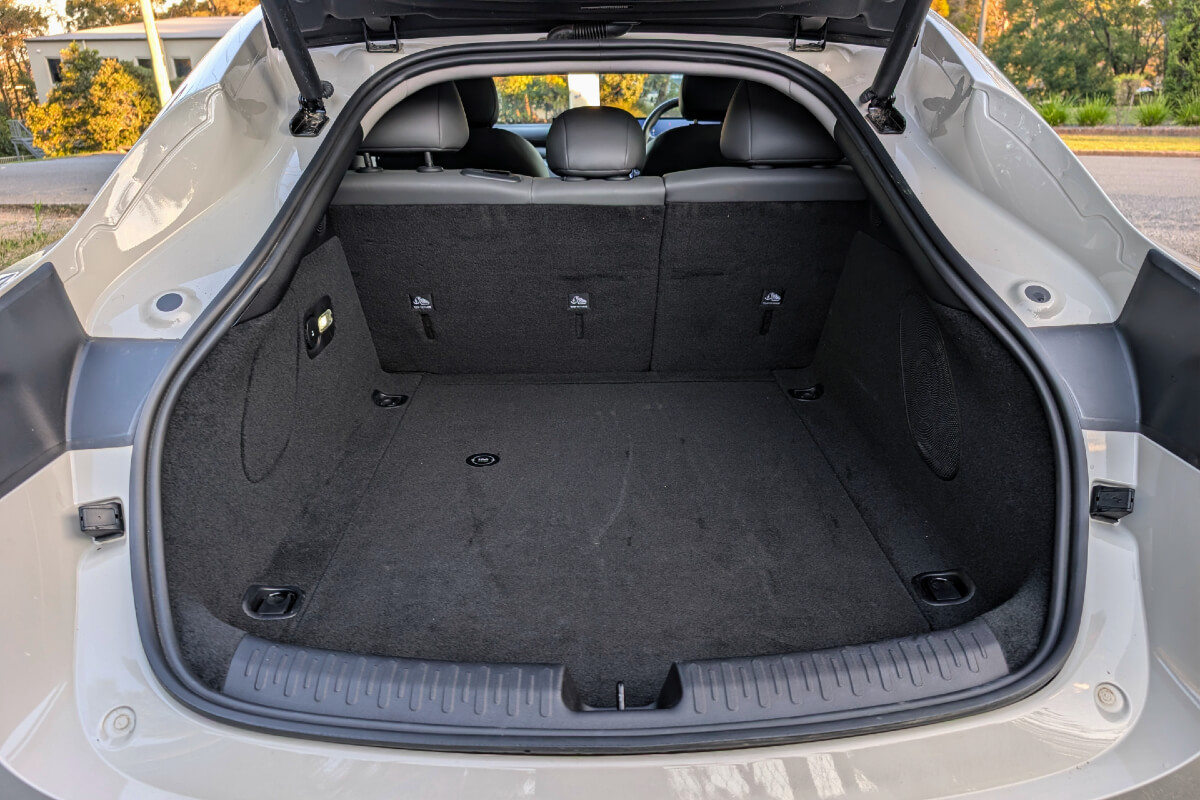
There’s 457 litres of luggage space in the boot with another 18 litres under the front bonnet where you’ll find the tyre repair kit secreted.
Rear storage expands to 1290 litres with the second row seats folded.
A 12V outlet for that fridge is provided in the back.
Depending on what grade you go for dictates the drivetrain supplied.
Premium sits on 400 watt architecture with a 75 kWh battery, Platinum and Performance boast an 800 watt figure, with a larger 100 kWh battery to boot.
Premium and Platinum are rear-wheel drive, Performance is all-wheel drive.
The easiest way to tell them apart is by the wheels. entry Premium sits on 19s, while Platinum and Performance score 20s (the latter fitted with expensive Pirelli rubber).
IM5 is equipped with what the company describes as revolutionary bi-directional rear-wheel turning technology, offering up to 12 degrees of rear-wheel articulation.
First off, it’s been around off and on for almost 40 years, since its introduction with the third‑generation Honda Prelude 4WS in 1987. Mazda also offered it at one stage.
An industry-leading feature, MG says this advanced system dramatically reduces the turning circle and transforms the driving experience, making it comparable to that of a compact hatchback.
It helps, but let’s not get carried away — if the effect was that dramatic it would be standard on just about every car.
The 10.5-inch touchscreen in the center console is better described as the control screen, because just about everything is operated from here.
That wouldn’t be so bad if the controls and their locations were more intuitive.
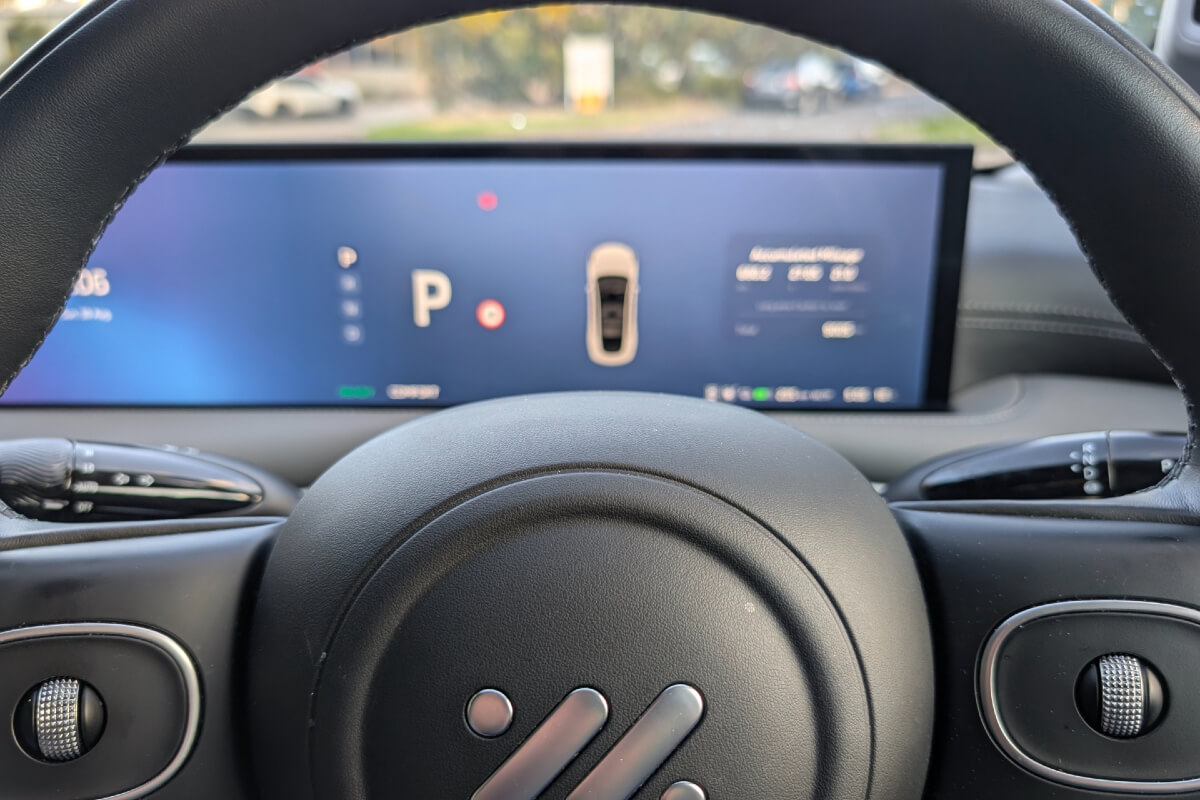
Two roller buttons are also provided on the steering wheel, but are not labelled.
We were unable to find a control for something as simple as re-setting the trip computer which says a lot.
Shaped like a car, the key fob has no attachment points, so can’t be added to a key ring and runs the risk of ending up in the wash. At times, it simply refused to work.
Every time we got into the car we were accosted by a privacy nag that required ticking a box and hitting another button before control screen access was granted.
Then there’s the satnav. To get it working you have to pull over, put it in Park, tick another box, scan a QR code, then read and sign off on a privacy statement — we just couldn’t work out how.
Most of the time we also had to manually reconnect our phone because the system simply ignored it.
Talk about frustrating.
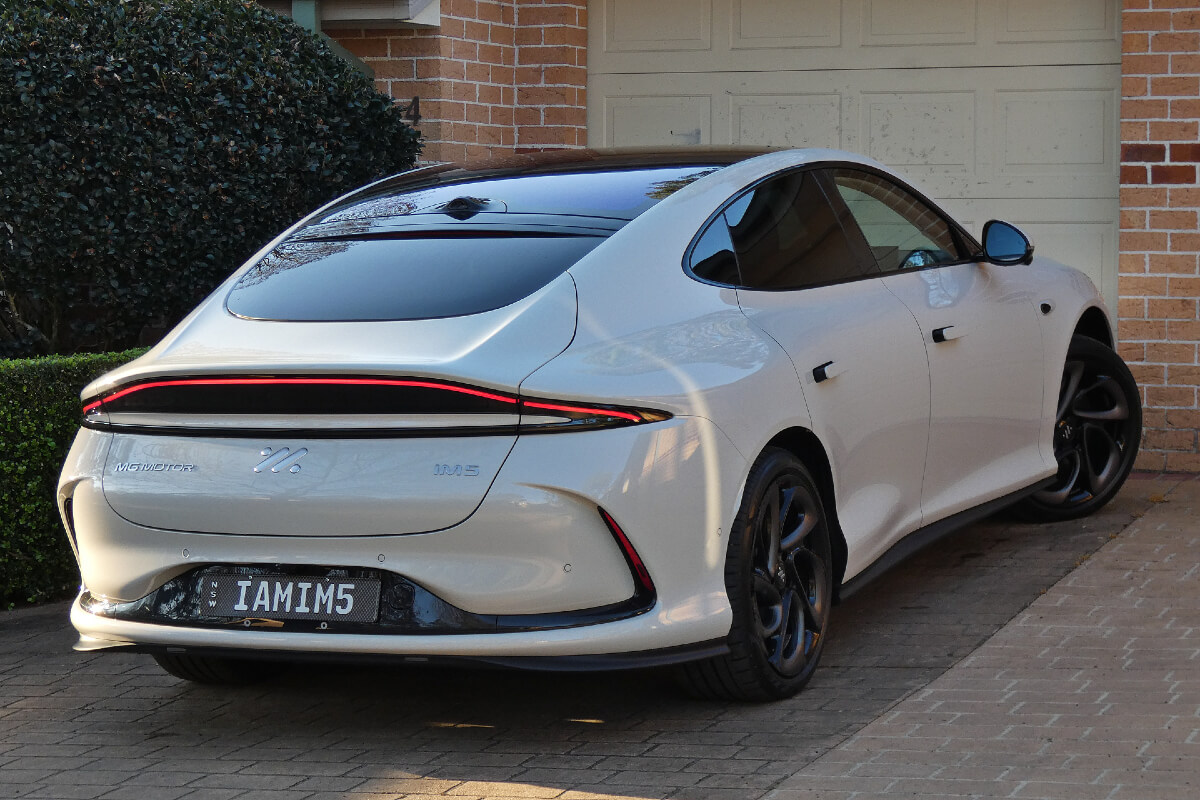
Rear and over-the-shoulder vision is a challenge, particularly through the tiny rear window, which is better described as a porthole.
Then there’s the incessant bings and bongs from the various driver warning systems.
As a temporary fix, put a bandaid over the camera that is mounted on the driver’s side roof pillar. Buy the car and we’d recommend surgery.

The Performance model boasts two electric motors, with a total 572kW of power and 820Nm of torque on tap, with drive to all four wheels via a reduction-style single-speed transmission.
As a result the dash from 0-100km/h can be dispatched in a Ferrari-quick 3.2 seconds, with a top speed of 268km/h.
Energy consumption is a claimed 19.7 kWh/100km (we were getting 20.5 kWh after more than 350km of mixed driving).
While ride quality is impressive thanks to adaptive air suspension and continuous damping system fitted, the car feels more at home on the super smooth pavement offered by the motorway.
This despite the staggered, ultra low profile 245/40 and 275/35 series Pirelli P-Zeros.
It’s also incredibly quiet in the cabin thanks in large part to noise cancelling technology.
Like other high performance EVs, the IM5 is almost unbeatable off the line, making short work of all comers.
On the rise and fall of country roads, however, it feels disconnected and unpredictable at times, lacking the connection between car and driver.
Cornering as such is not the problem, it’s setting up the car for the corners that is the challenge.
Braking is a bit of a lottery, not so much in effect but more in application — sometimes they bite hard, sometimes they don’t. It’s problematic.
Sure the IM5 goes fast, not so much around corners but in a straight line — but at the end of the day is that enough?
What do we like?
- Love the number plate
- Addicted to the throttle response
- Porsche performance for a Chinese price
What we don’t like?
- Awkward entry and exit
- Erratic remote key behaviour
- Lack of instructions
- Phone does not reconnect
The bottom line?
The IM5 is a lot of car, it’s just not the car for us.
We’d also consider the Platinum variant, which is also pretty quick and has the advantage of greater range at 655km.
Iron out the niggles, make the info system more intuitive, get rid of the constant driver warnings and MG could be on to a good thing.
By the way, we’re still waiting to hear why the doors on the Cyberster won’t open when the car is parked on a slope?
CHECKOUT: IM AN MG (More or less)
CHECKOUT: MG IM6 Performance: Code for lightning fast
IM Presented by MG Motor IM5 Performance, priced from $80,990
-
Looks - 7.5/10
7.5/10
-
Performance - 8/10
8/10
-
Safety - 8/10
8/10
-
Thirst - 7/10
7/10
-
Practicality - 5/10
5/10
-
Comfort - 7/10
7/10
-
Tech - 7.5/10
7.5/10
-
Value - 8/10
8/10
