
What is it?
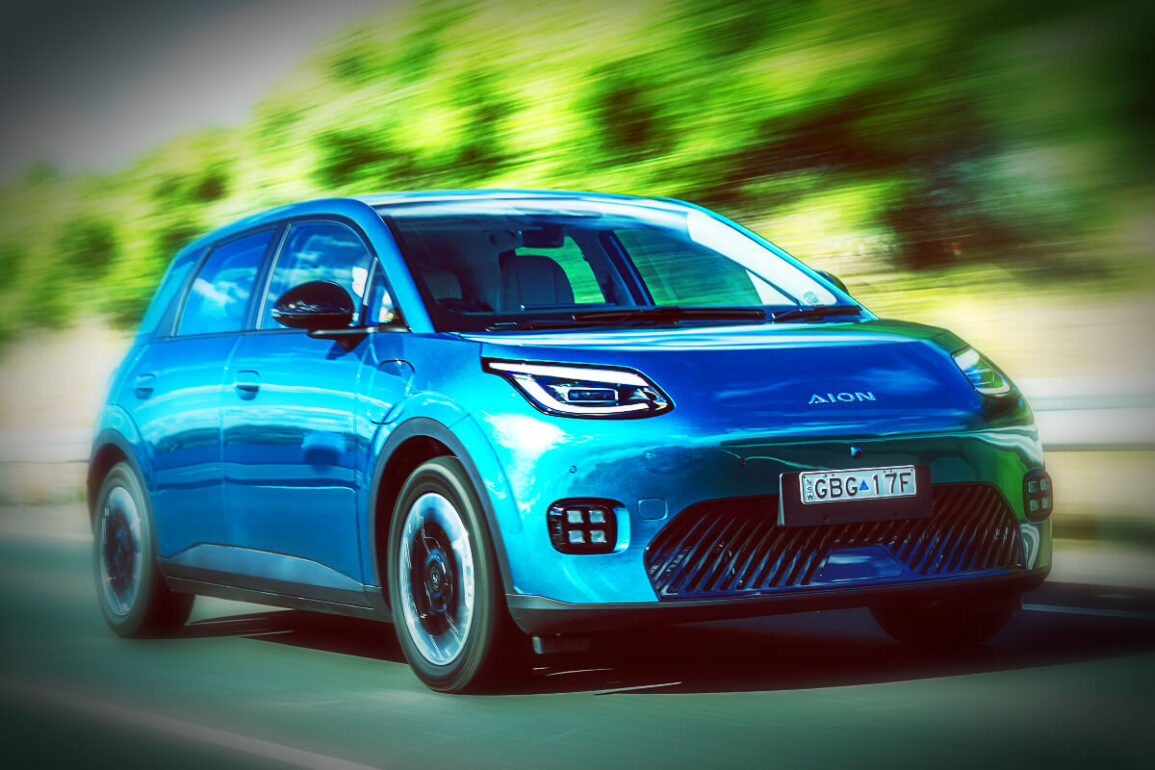
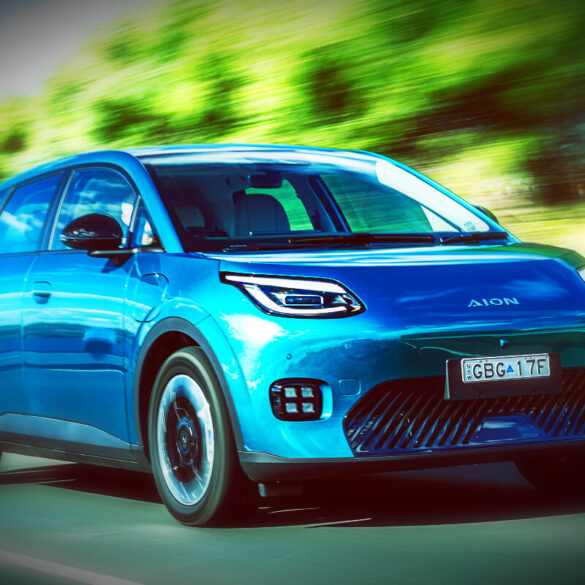
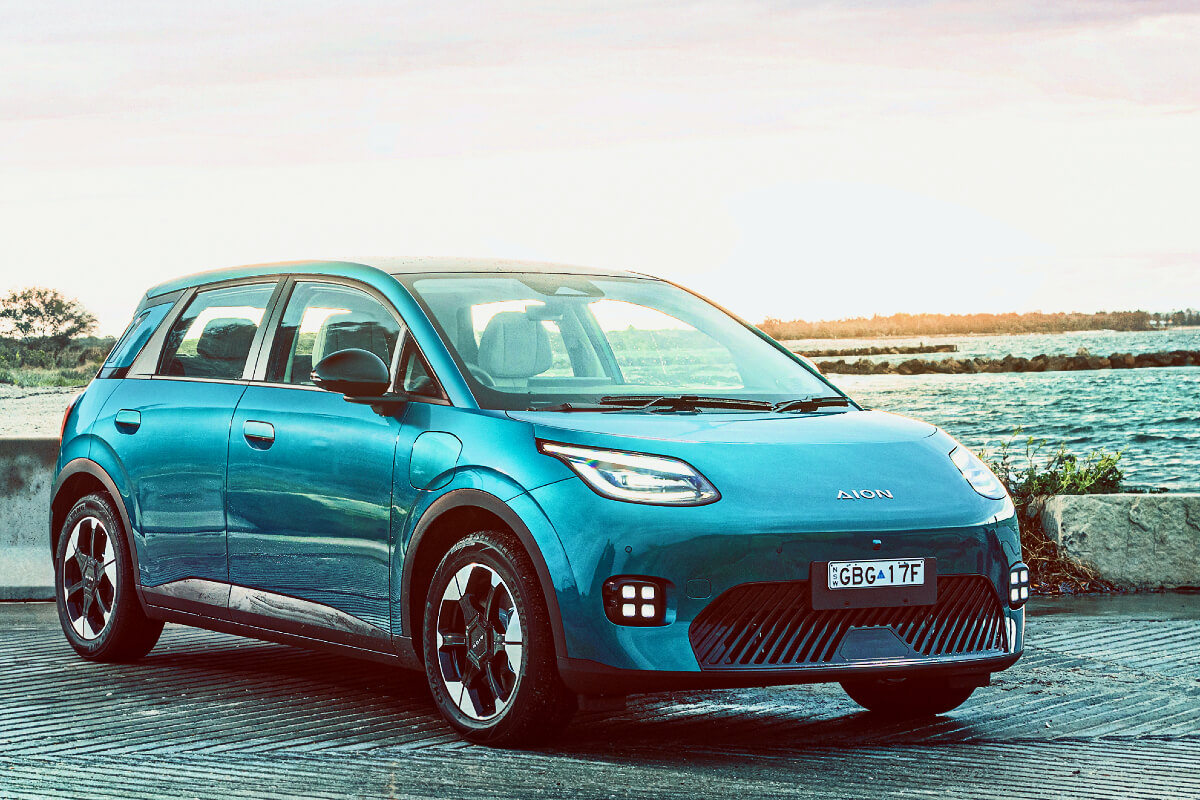
The GAC Aion UT is a small electric hatchback that demonstrates just how much car you can squeeze into a relatively tiny footprint when you stop wasting half the vehicle on an internal combustion engine.
At 4270mm long, the UT is substantially shorter than a Toyota Corolla, yet its 2750mm wheelbase creates a cabin that feels more like something from the class above.
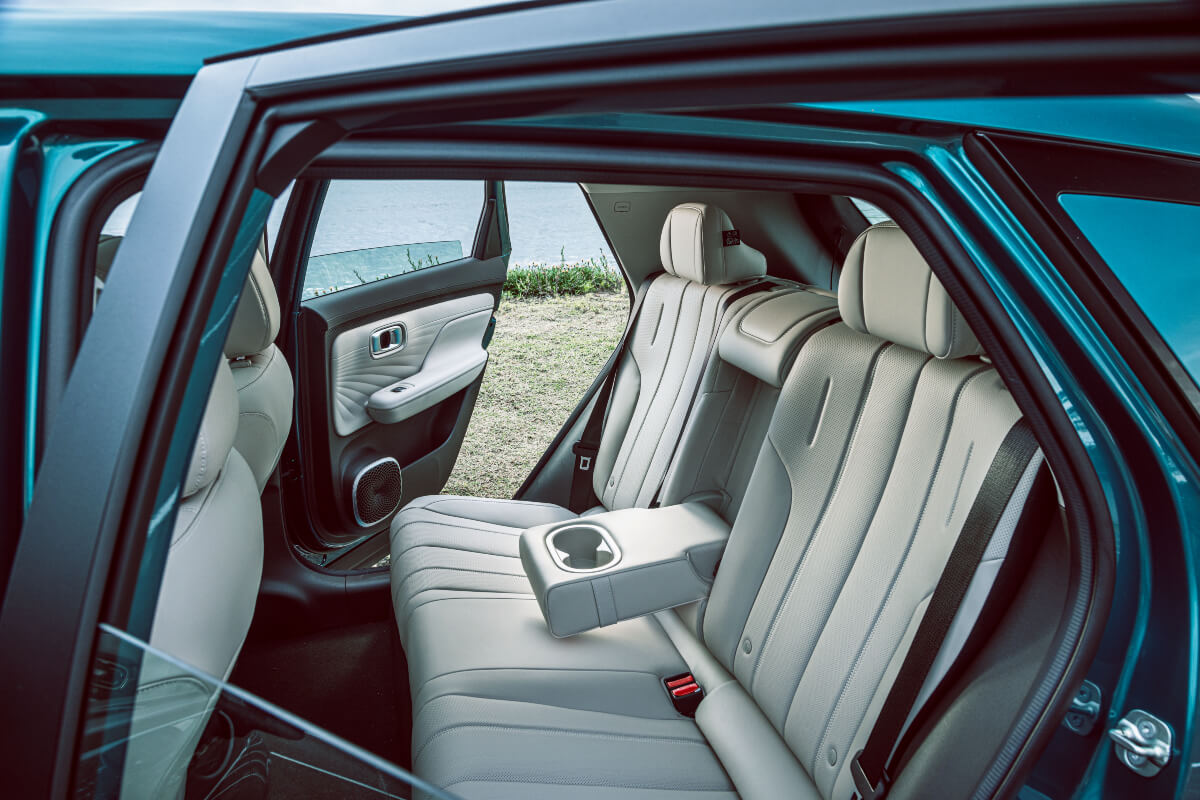
There’s 905mm of rear legroom, which is ridiculous for a little hatchback.
Put an adult in the back and they don’t immediately start looking for the ejector seat.
This is one of the things I like most about the Aion UT. It’s the car the Fiat 500e should have been.
It’s small, cute, electric, practical and affordable enough that ordinary people might actually consider buying one rather than treating it as an expensive fashion accessory.
The 500e was supposed to bring some Italian charm to affordable electric motoring, but the price made it difficult to justify.
The Aion UT takes a different approach. It gives you a 60kWh battery, 430km of WLTP range and 150kW of power for $31,990 drive-away in Premium guise.
That is a lot of electric car for the money.
The Aion UT uses a front-mounted permanent magnet synchronous motor producing 150kW and 210Nm. It gets from 0-100km/h in 7.3 seconds and has a 160km/h top speed.
It isn’t a sports car, and it doesn’t pretend to be one, but 150kW in a little hatchback means it has plenty of shove around town.
Our experience suggested the range claim is reasonably close to reality, which is always nice because there’s nothing more annoying than a car promising a kilometre figure that seems to have been calculated while falling down the stairs.
Charging is less impressive. AC charging is limited to 11kW while DC charging peaks at 87kW. GAC says 30-80 per cent takes 24 minutes.
The UT also comes with vehicle-to-load capability, which lets you run things such as a fridge or tools from the battery.
GAC throws in a 22kW wall charger, 10-amp portable charger and a Type 2 cable. That’s a pretty useful collection of equipment to get with the car rather than discovering after purchase that your new EV needs another few thousand dollars thrown at it before you can charge the bloody thing.
What’s it cost?
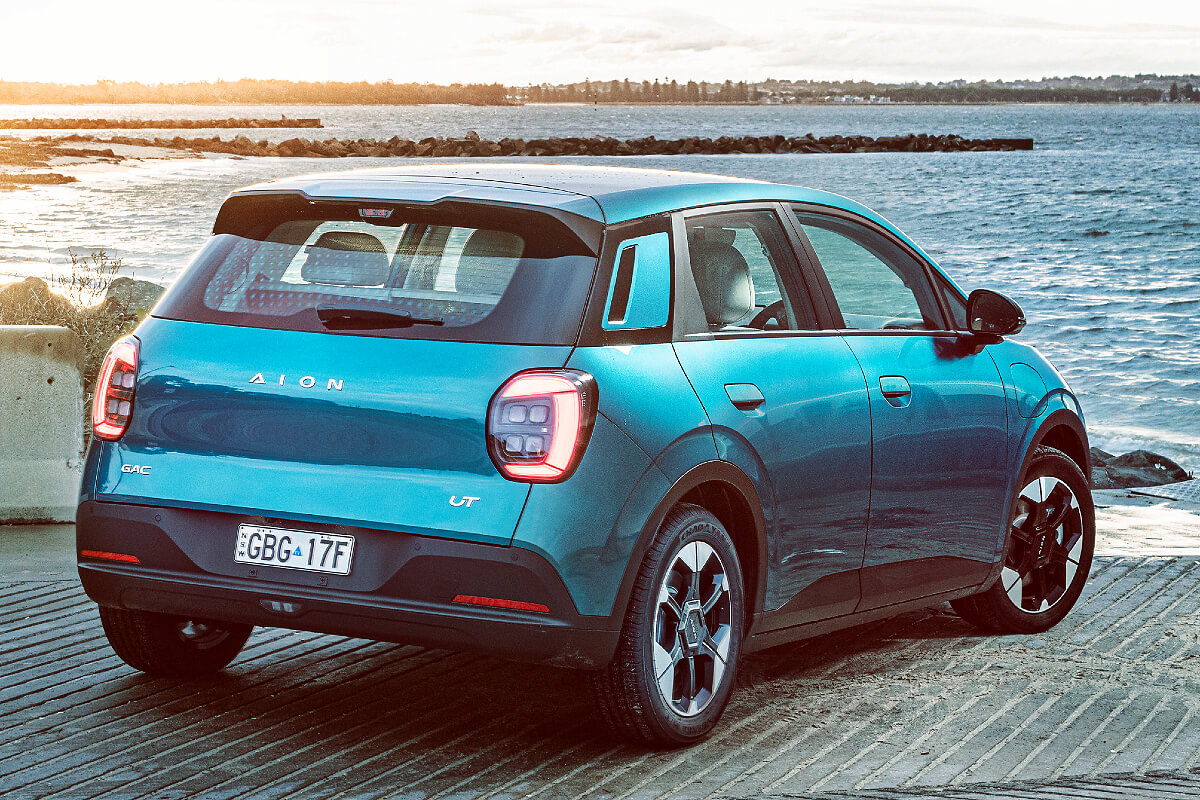
There are two grades. Premium costs $31,990 while Luxury costs $35,990, both prices driveaway under introductory pricing.
The Luxury adds a panoramic sunroof, powered tailgate, ventilated driver’s seat, wireless phone charging, power-folding mirrors, an auto-dimming rear-view mirror and a rear USB-A socket.
But I’d buy the Premium. More on that later.
That pricing puts it into a very interesting part of the Australian EV market because the obvious competition doesn’t always compare directly.
A BYD Dolphin Essential might look cheaper at $29,990, but that’s before on-road costs and it has a 45kWh battery, 340km range and just 70kW of power. Match the Aion UT’s 60kWh battery, 430km range and 150kW output and you’re looking at the Dolphin Premium for around $36,990 before on-road costs.
The MG4 Urban is around the same money at $31,990 driveaway, while the GWM Ora is $33,990 driveaway.
The Aion UT therefore sits in a very competitive little pocket of the market, but it has one trick the others struggle to match.
Space.
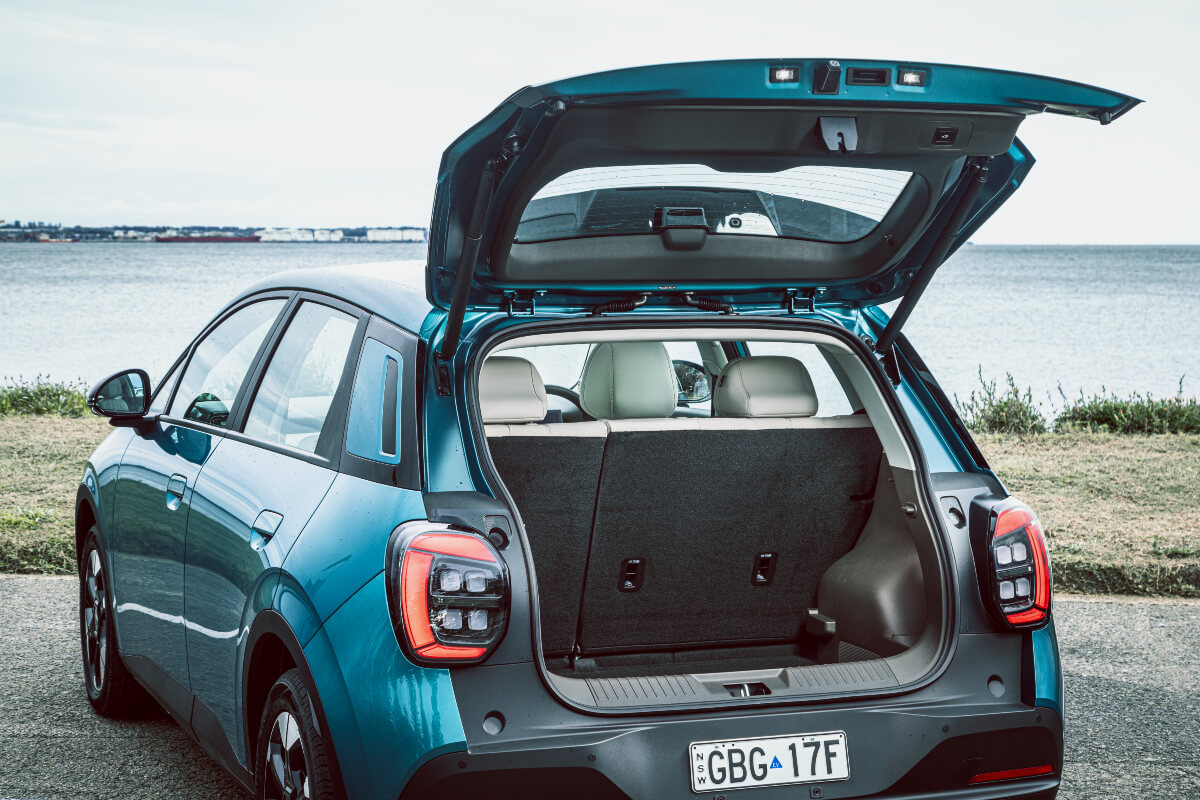
The long wheelbase gives the UT a genuinely useful rear seat. The boot holds 321 litres, increasing to 689 litres with the rear seats folded. There’s also a huge underfloor storage area for charging cables and other bits and pieces.
There’s no frunk because the motor and associated hardware occupy the front end.
There’s also no spare wheel, just a tyre repair kit. That’s increasingly common with modern cars but remains bloody annoying if you leave the city or spend any time travelling through places where the nearest tyre place isn’t five minutes away.
The 8-year unlimited-kilometre vehicle warranty is reassuring for a new brand. The battery is covered for eight years or 200,000km.
And that brings us to the elephant in the room.
GAC is new to Australia.
The product may be good, but buyers are also buying into a dealer network and a brand that doesn’t yet have decades of Australian history behind it. We’ve seen plenty of established brands disappear from this market, so longevity isn’t something you can judge purely by how long a badge has been here.
The UT itself isn’t the risky bit. The brand is the bigger unknown.
What’s it go like?
The first thing you notice is how comfortable the Aion UT is.
GAC has gone for a soft suspension tune, and around town that works beautifully. Broken suburban roads, tram tracks and speed humps are dispatched with very little drama. The little car feels calm and almost luxurious when trundling around town.
It’s quiet, comfortable and easy to drive.
The steering is extremely light but reasonably quick, making parking and tight urban manoeuvring effortless. There’s no great sporting pretence here and there’s no point looking for steering feel that simply isn’t there.
This is transport.
And that’s actually one of its charms.
The 150kW motor gives the UT plenty of poke, but it also exposes one of the car’s weaknesses. Put all that power through the front tyres and they can become rather busy.
On a clean, dry road, the claimed 7.3-second 0-100km/h time is believable and the car feels properly frisky from the lights. On a damp roundabout, however, bury the throttle and the traction control has a meltdown.
The rear suspension uses a torsion beam rather than independent suspension. Around town you barely care because the ride is so comfortable, but push harder into a corner and the rear becomes noticeably less settled.
Hit a bump halfway through a corner and the back can skip sideways. Nothing terrifying happens, but the car is effectively telling you to slow down. Which is fair enough.
The Aion UT isn’t intended to be a hot hatch. It’s a small electric city car that happens to have enough power to make merging and overtaking easy.
The biggest problem during our week with it wasn’t the suspension. It was the software.
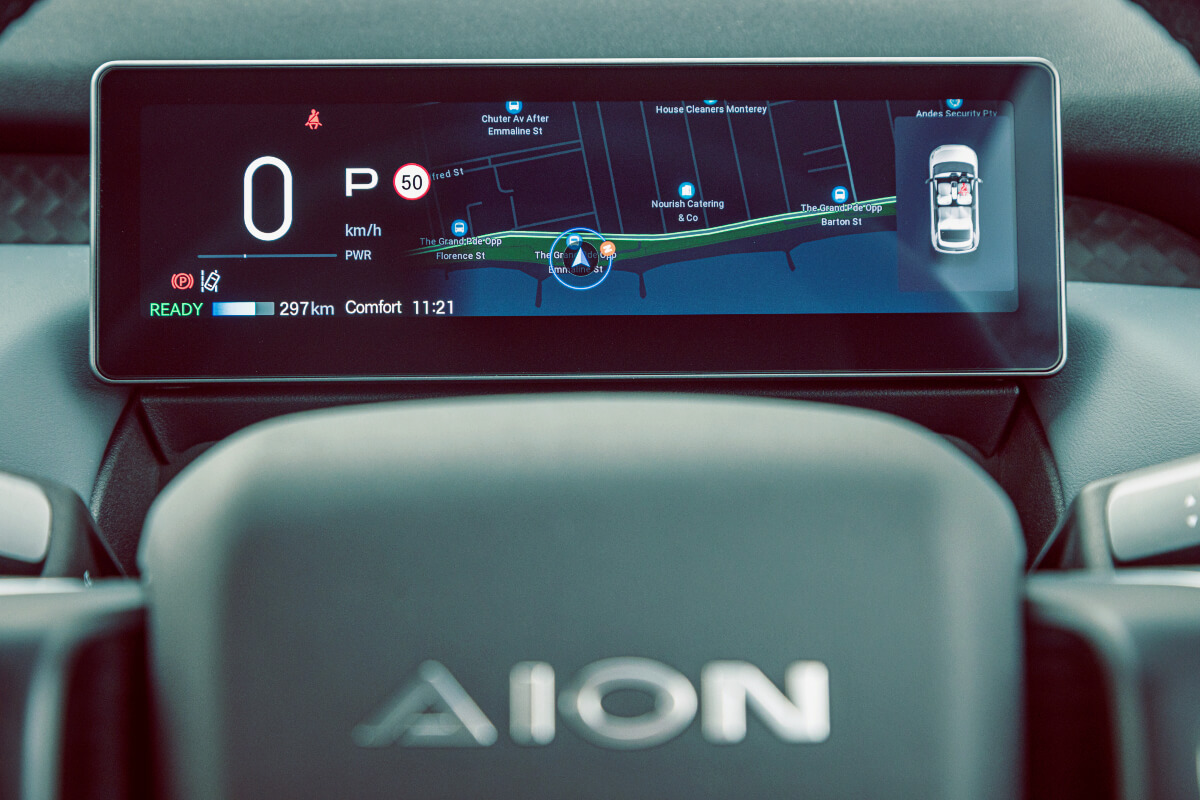
The ordinary cruise control works properly. You can select a following distance and the driver monitoring can be switched off and remains off.
Activate the smart cruise with ICC lane steering and things go sideways.
The following distance becomes fixed at the longest setting, the driver monitoring switches itself back on and the lane steering wanders around like a drunken sailor.
We performed an over-the-air update and it didn’t solve the problem.
Worse, the distance sensing failed us twice. It worked most of the time, but on two occasions the car behaved as though it wasn’t detecting the vehicle ahead properly. One of those incidents happened while we were filming.
That’s not something I’d shrug off.
The good news is that ordinary cruise control behaves itself, so the answer for now is simple. Leave ICC switched off until GAC sorts the software.
Then there are the warning bongs. Modern cars have become increasingly enthusiastic about telling drivers that they’re doing things wrong, usually with an assortment of noises that would make a supermarket checkout machine feel positively restrained.
The UT isn’t uniquely bad here. Much of this stuff is tied to the requirements surrounding modern safety systems and five-star crash ratings.
But it is annoying. Every trip starts with a ritual of switching things off, and you have to repeat the process every time you start the car.
The infotainment system is another mixed bag.
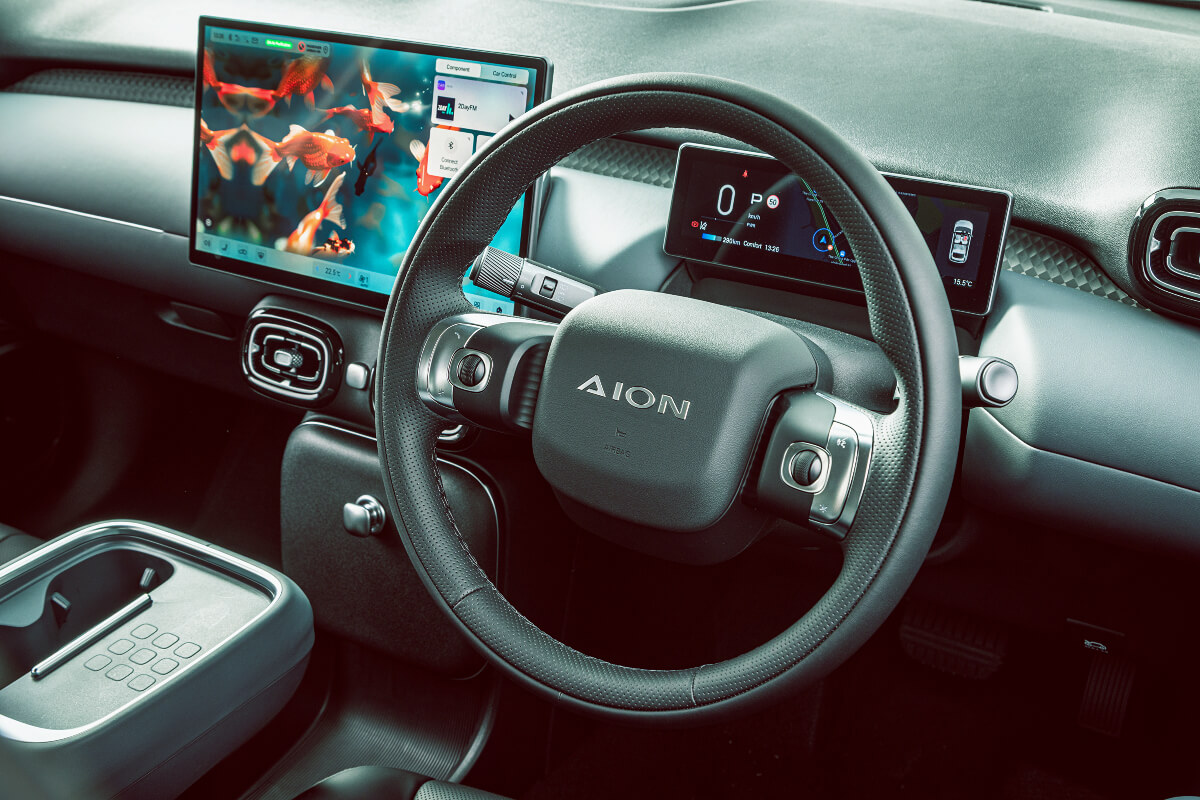
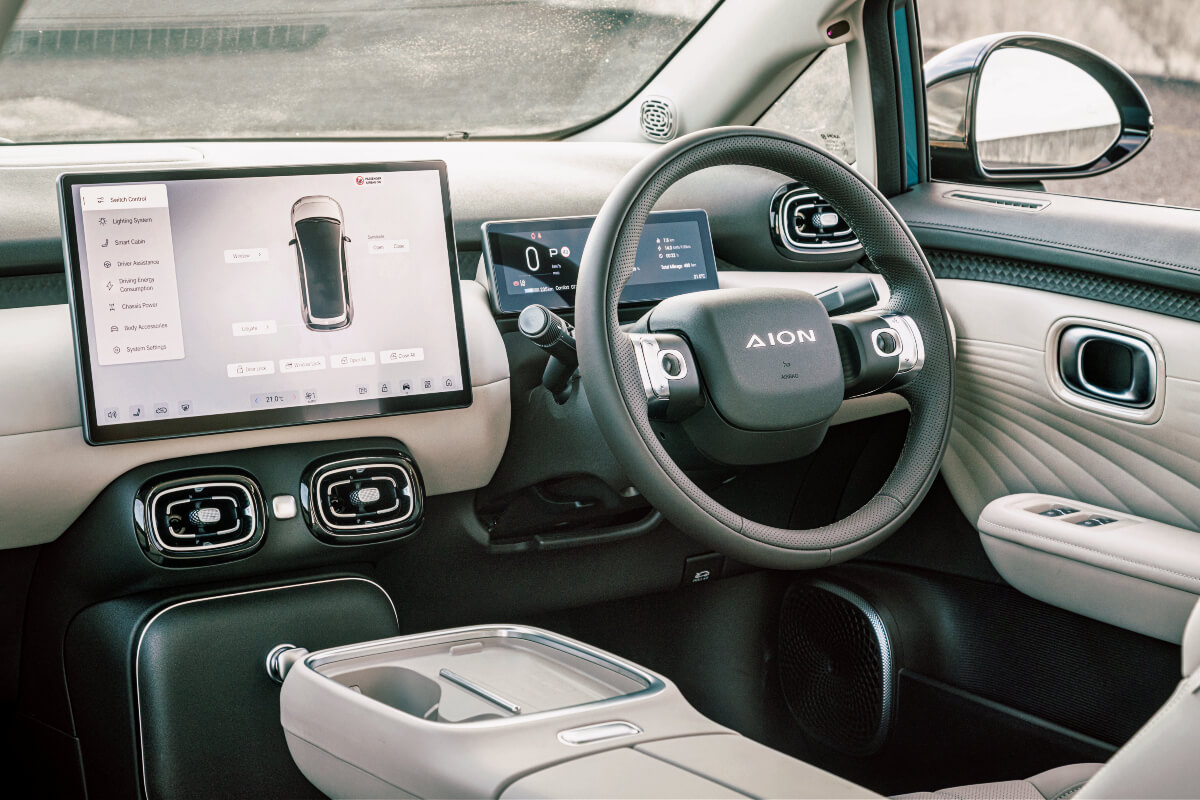
The 14.6-inch portrait screen runs GAC’s Adagio interface over Android Open Source Project software. Menus are reasonably logical once you’ve learned where everything lives, but there are occasional glitches.
The bigger problem is putting climate controls into the touchscreen. Changing the fan speed while driving shouldn’t require you to look away from the road and hunt around on a flat piece of glass. Buttons exist for a reason.
The phone connection was also inconsistent. An iPhone 17 Pro Max frequently failed to connect automatically, while the passenger airbag warning sits across part of the Google Maps interface and can get in the way of exiting, searching or using the microphone.
These aren’t deal-breaking faults, but they are the sort of things that need fixing because the underlying car is so good.
What we like?
- Excellent value for money
- Huge rear-seat space for such a small car
- Comfortable, quiet ride around town
- 150kW motor gives it plenty of poke
- 60kWh battery and 430km WLTP range
What we don’t like?
- 87kW maximum DC charging
- Infotainment glitches and awkward climate controls
- Smart cruise and lane steering software problems
- No spare wheel
- Front tyres struggle with all that power
The bottom line?
The GAC Aion UT is one of those cars that makes you wonder why some manufacturers spent years telling us affordable electric cars couldn’t be done.
Here it is. A small EV with a 60kWh battery, 430km of claimed range, 150kW of power, proper rear-seat space and a genuinely comfortable cabin for $31,990 drive-away.
It isn’t perfect. The DC charging speed is only 87kW, the rear suspension isn’t particularly happy when pushed and the touchscreen-heavy cabin has some irritating design decisions.
The smart cruise software is the bigger concern and should be fixed before anyone starts treating it as a system they can rely on.
But none of those issues changes the fundamental appeal of the car.
The Aion UT is exceptionally good at being an affordable electric city car. It isn’t exciting to drive, and that’s fine. In fact, that’s part of the appeal.
The ride is comfortable, the steering is light, the cabin is quiet and there’s enough power to make everyday driving effortless.
The clever packaging is perhaps the best part. This is a 4.27-metre-long hatchback with rear legroom that belongs in something considerably larger.
The 2.75-metre wheelbase is doing enormous amounts of work, and the result is a car that’s genuinely useful rather than merely small.
I’d take the Premium.
The Luxury’s ventilated driver’s seat is lovely and the panoramic roof is attractive, but the extra equipment doesn’t fundamentally change the car. The power tailgate is particularly unnecessary. On a hatchback this size, your arm will open the bloody thing faster.
The biggest question isn’t whether the Aion UT is a good little car. It is.
The bigger question is whether Australian buyers are prepared to put their money behind a relatively new Chinese brand.
That’s a decision each buyer has to make, but the car itself gives them plenty of reasons to consider it.
For years we’ve been told cheap EVs couldn’t offer decent range, useful performance and proper equipment without costing a fortune.
The Aion UT has turned up and rather rudely asked why not.
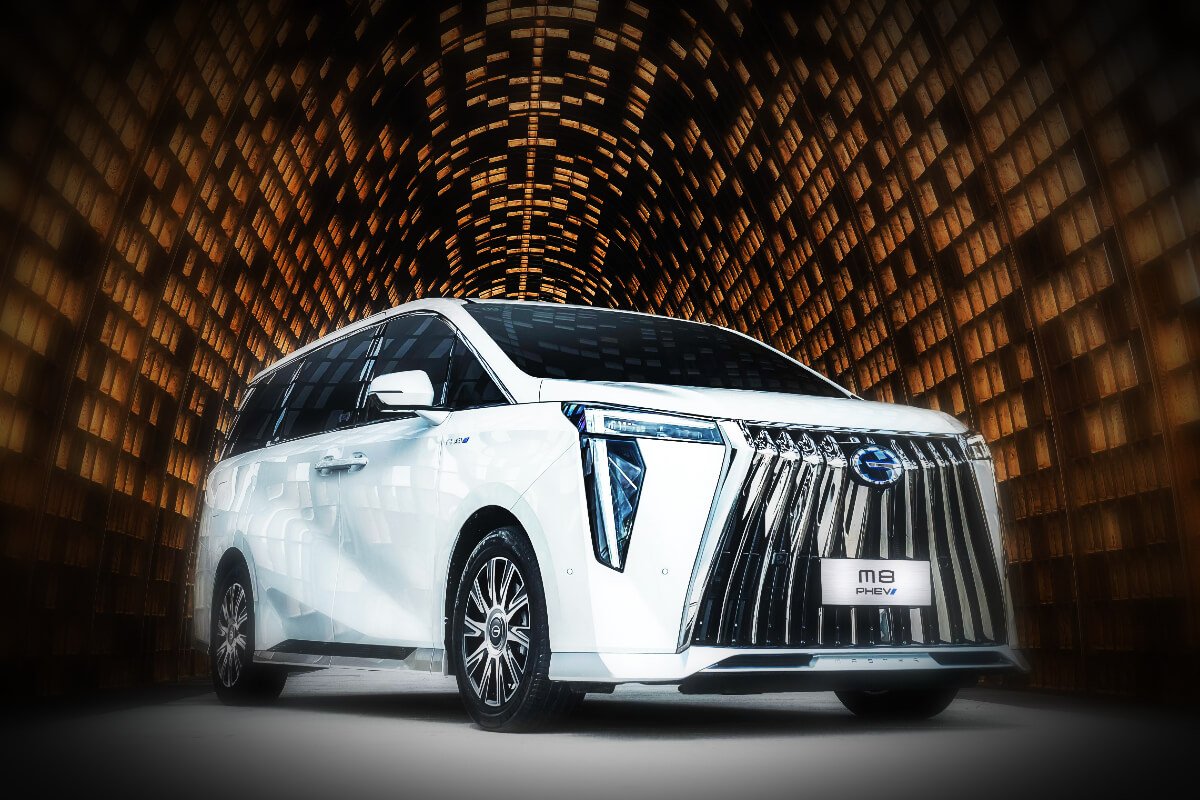
CHECKOUT: GAC M8 PHEV: Catch me if you can
CHECKOUT: GAC AION V: Versatile family transport
GAC Aion UT Premium, priced from $31,990 driveaway
-
Looks - 9/10
9/10
-
Performance - 8/10
8/10
-
Safety - 7/10
7/10
-
Thirst - 8/10
8/10
-
Practicality - 9/10
9/10
-
Comfort - 9/10
9/10
-
Tech - 9/10
9/10
-
Value - 7/10
7/10